Why the Mova Z60 Ultra is Redefining Clean in 2025
For anyone who’s ever experienced ‘robot vacuum fatigue,’ the Mova Z60 Ultra offers a refreshing solution. We’ve all been there: the frustration of embarking on a “rescue mission” to free a stuck robot or the disappointment of returning home to damp carpets or sticky floors after a cleaning cycle. These common annoyances have made many question the value of autonomous cleaning devices. However, the Z60 Ultra addresses these issues head-on with its impressive features.
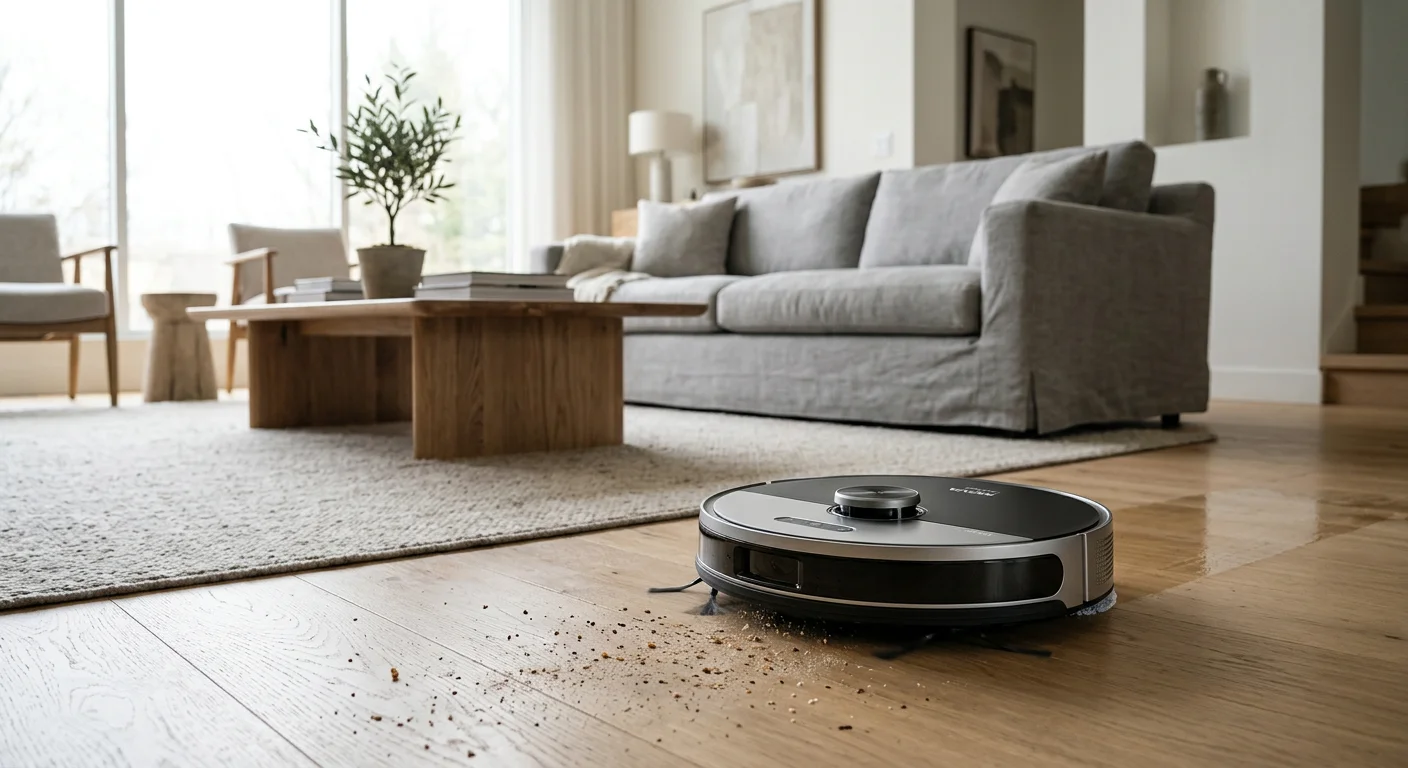
The Z60 Ultra’s 28,000 Pa suction power is a game-changer, tackling the debris and dirt that previous models often left behind. This powerful suction, combined with its ability to climb over elevated surfaces, ensures that the vacuum can navigate and clean multiple surfaces without getting stuck. The enhanced climbing specs mean fewer interruptions and a truly autonomous cleaning experience. By solving these pain points, the Z60 Ultra redefines what consumers can expect from a robot vacuum in 2025.
The Physics of 28,000 Pa: More Than Just a Number
Raw suction power only tells part of the story — but when the gap is this wide, the number genuinely matters.
The industry baseline for flagship robot vacuums sits between 5,000 and 8,000 Pa. The Mova Z60 Ultra Roller Complete Robot Vacuum and Mop 28,000 Pa rating doesn’t just nudge past that ceiling — it blows past it by a factor of three or more. In practice, that difference is most visible on deep-pile carpet, where lower-suction machines skim the surface while the Z60 Ultra pulls embedded debris — pet hair, fine grit, dried crumbs — from well below the fiber tips.
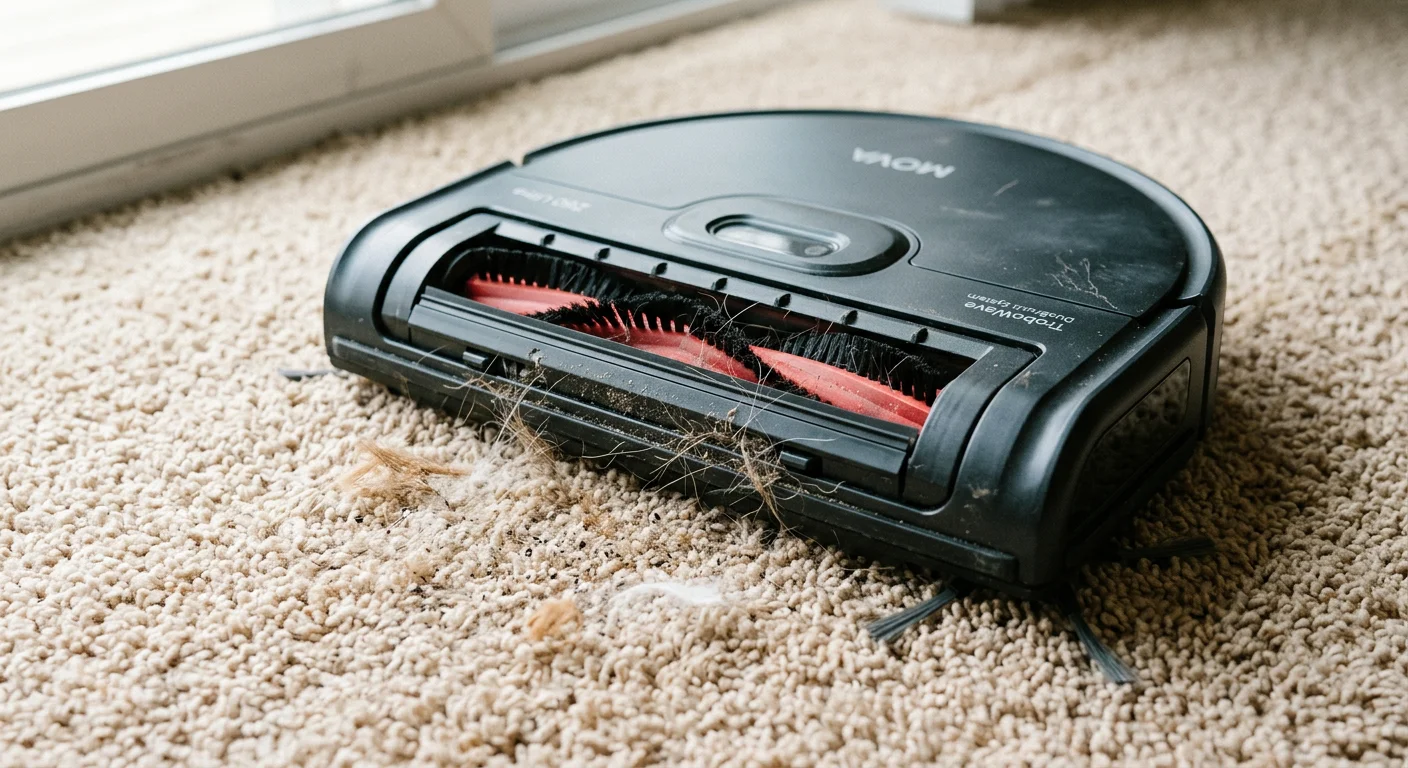
High suction without tangle management, however, is a liability. That’s where the TroboWave™ Anti-Tangle DuoBrush System becomes essential to the Z60 Ultra’s design. By actively countering hair wrap at the brush roll level, it keeps airflow paths clear even during high-load passes — preserving suction consistency across an entire cleaning cycle rather than degrading midway through a room.
There’s an important caveat worth acknowledging: raw Pa ratings mean little if the internal airflow architecture can’t sustain them. Suction at the motor doesn’t equal suction at the floor without a well-designed cyclonic path and sealed dustbin. The Z60 Ultra’s engineering addresses exactly that gap — setting up a cleaning system where power, brush mechanics, and airflow work together rather than against each other.
That same engineering discipline carries into how the robot handles the physical world — which becomes especially relevant when it encounters one of the most persistent failure points in autonomous cleaning: the threshold.
Solving the Threshold Problem with StepMaster 2.0
Most robot vacuums stumble — literally — the moment they encounter a raised threshold, a shag rug edge, or the lip between hardwood and tile. It’s one of the most consistent complaints across every segment of the market: you set the robot loose, walk away, and return to find it beached on a half-inch door strip, having cleaned exactly one room.
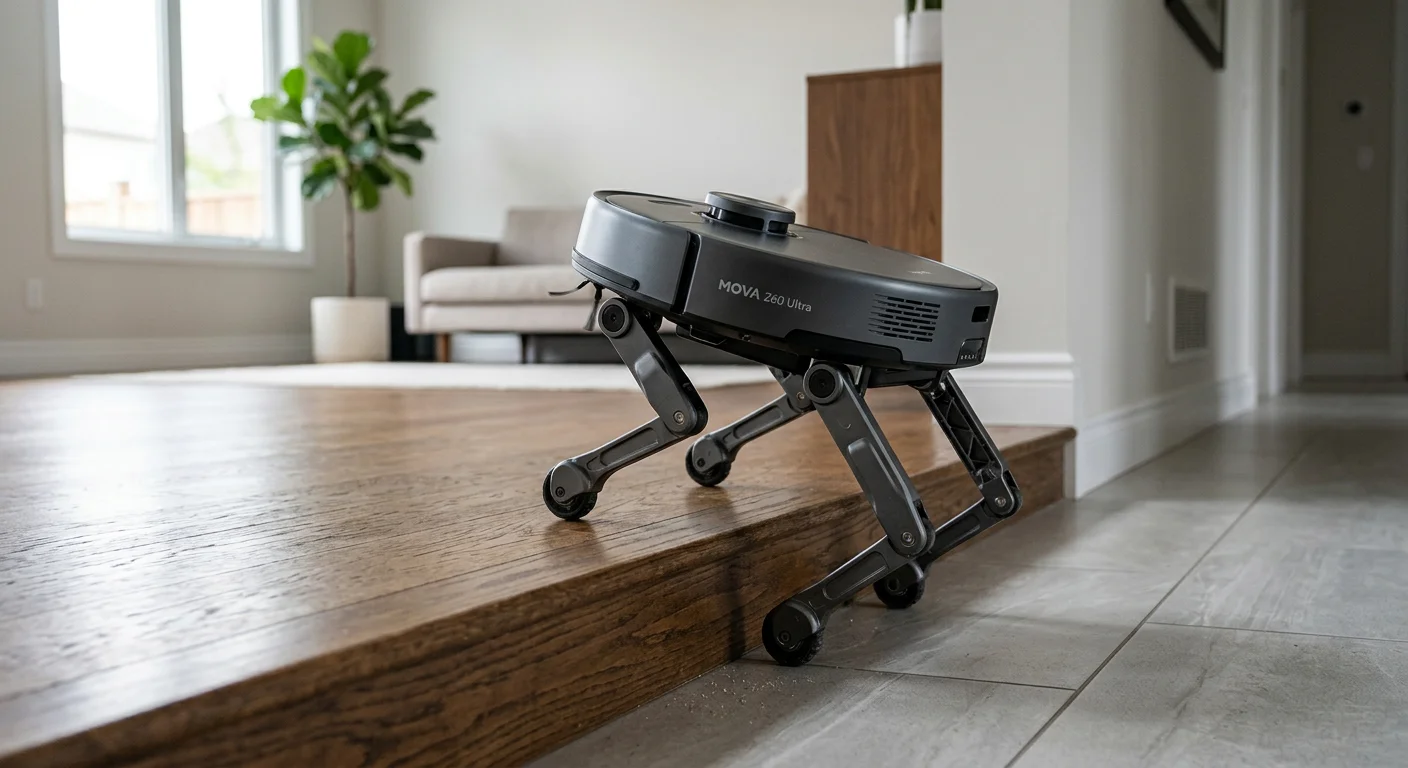
The Mova Z60 Ultra addresses this with its StepMaster 2.0 system, a mechanical solution built around the LiftPro chassis — a retractable leg design that actively raises the robot’s body as it approaches an obstacle rather than simply hoping enough momentum carries it over. In practice, the legs extend, shift the center of gravity forward, and give the unit enough clearance to mount surfaces that would stop conventional flat-bottomed robots cold.
The result is a climbing height of up to 80mm (3.15 inches), achieved through a sequential approach: a 45mm primary lift followed by a 35mm secondary step. That’s not a small margin. Most flagships cap out somewhere between 20mm and 25mm, meaning the Z60 Ultra can clear obstacles that alternatives simply cannot.
For multi-room cleaning, this changes everything. A robot that navigates every threshold autonomously completes full-floor runs without intervention — which is precisely the promise a Mova Z60 Ultra Roller Robotic Mopping Vacuum Review should hold the product accountable to. Fewer rescues mean longer unattended cleaning cycles and, ultimately, a cleaner home.
Of course, climbing gets you into the room. What happens once the robot arrives — specifically, how it handles the floor itself — is where the mopping system takes over.
HydroForce Mopping: Real-Time Scrubbing vs. Passive Dragging
Most robot mop systems share a fundamental flaw: they drag a single wet pad across every surface in your home, spreading the same dirty water from room to room until the cycle ends.
Traditional spinning or vibrating pads don’t clean — they redistribute. Once a pad picks up grease from the kitchen, that contamination travels onto your hallway hardwood and bathroom tile. There’s no mechanism to flush out what’s already been absorbed.
The Mova Z60 Ultra’s HydroForce system tackles this differently. According to [protoolreviews.com](http://protoolreviews.com), the Z60 uses a cylindrical roller mop that is constantly sprayed with fresh water from 12 dedicated nozzles, while a built-in squeegee extracts dirty water in real-time — before it can be redeposited on the next surface. The result is a continuous-rinse process rather than a passive dragging motion.
Here’s how the cycle works on every pass:
- 12 nozzles spray a consistent stream of fresh water directly onto the roller
- The roller scrubs with active rotational pressure, loosening dried spills and stuck debris
- The squeegee extracts the dirty water immediately, preventing cross-contamination
- The process resets with each revolution, so the roller is always working with clean water
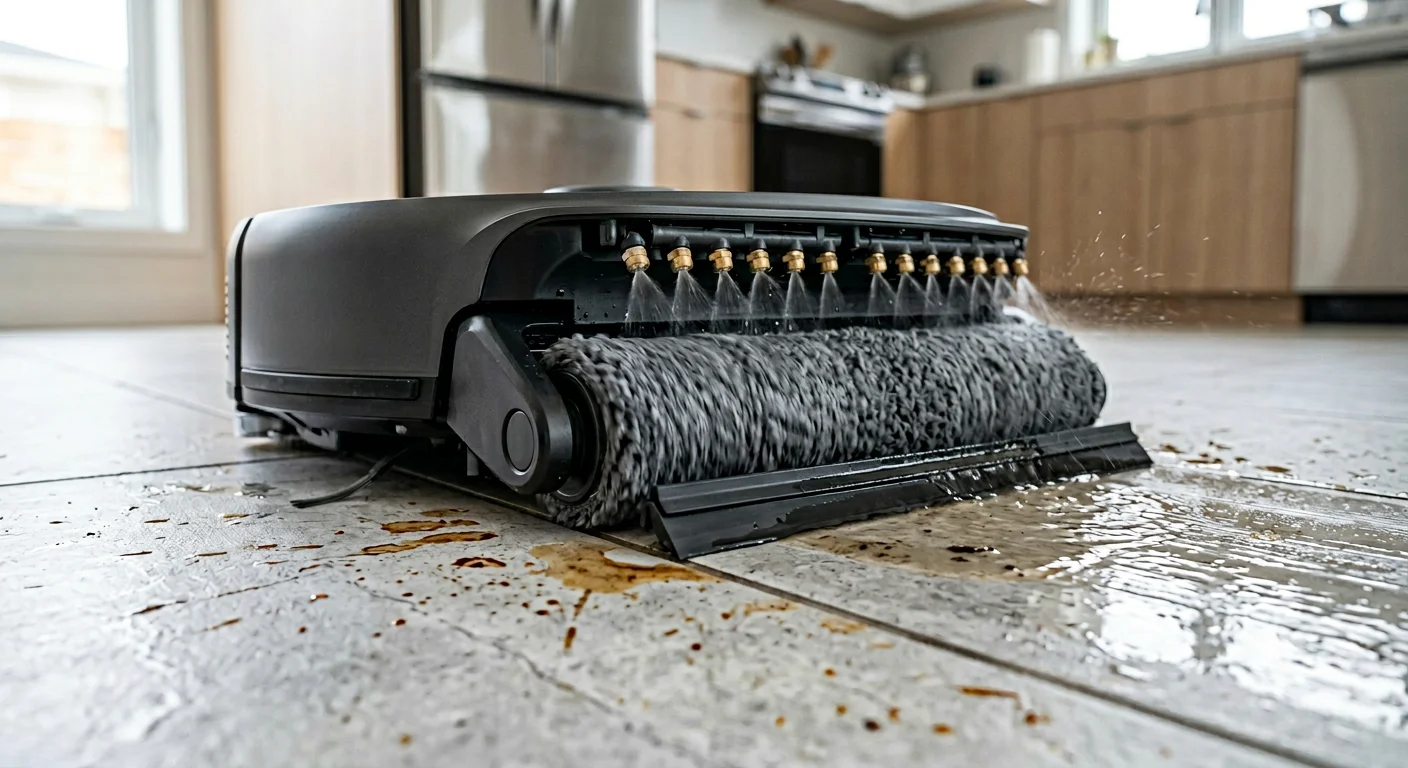
For anyone asking Is the Mova Z60 Ultra good on hard floors specifically, this architecture is the clearest differentiator from competing approaches. Standard spinning pads have no equivalent extraction step — water simply evaporates or spreads.
That real-time separation of clean input and dirty output is what elevates the Z60 beyond conventional mopping. It also raises an equally important question: what happens when that same wet roller encounters a carpet?
AutoShield Technology: The End of Damp Carpets
Carpet anxiety is one of the most underrated frustrations in the robot vacuum category — the silent dread of watching a wet mop head drift toward an expensive area rug. For anyone who’s returned home to damp carpet edges or waterlogged fringe, it’s a dealbreaker that no mapping algorithm alone can fully solve.
The Z60 Ultra addresses this at the hardware level. When the robot’s sensors detect a transition from hard floor to carpet, AutoShield technology deploys a physical moisture barrier — not just a software command, but an actual mechanical shield that prevents the roller mop from making contact with carpet fibers. According to Best Buy, the system works by simultaneously retracting the roller mop and deploying the moisture shield as a unified response, rather than treating them as two separate actions.
The result is a near-seamless handoff: the mop lifts, the shield extends, and the robot transitions onto carpet without leaving a wet trail behind it. This integration with the self-lifting mechanism — already one of the Z60’s standout features — means the two systems reinforce each other rather than competing for response time.
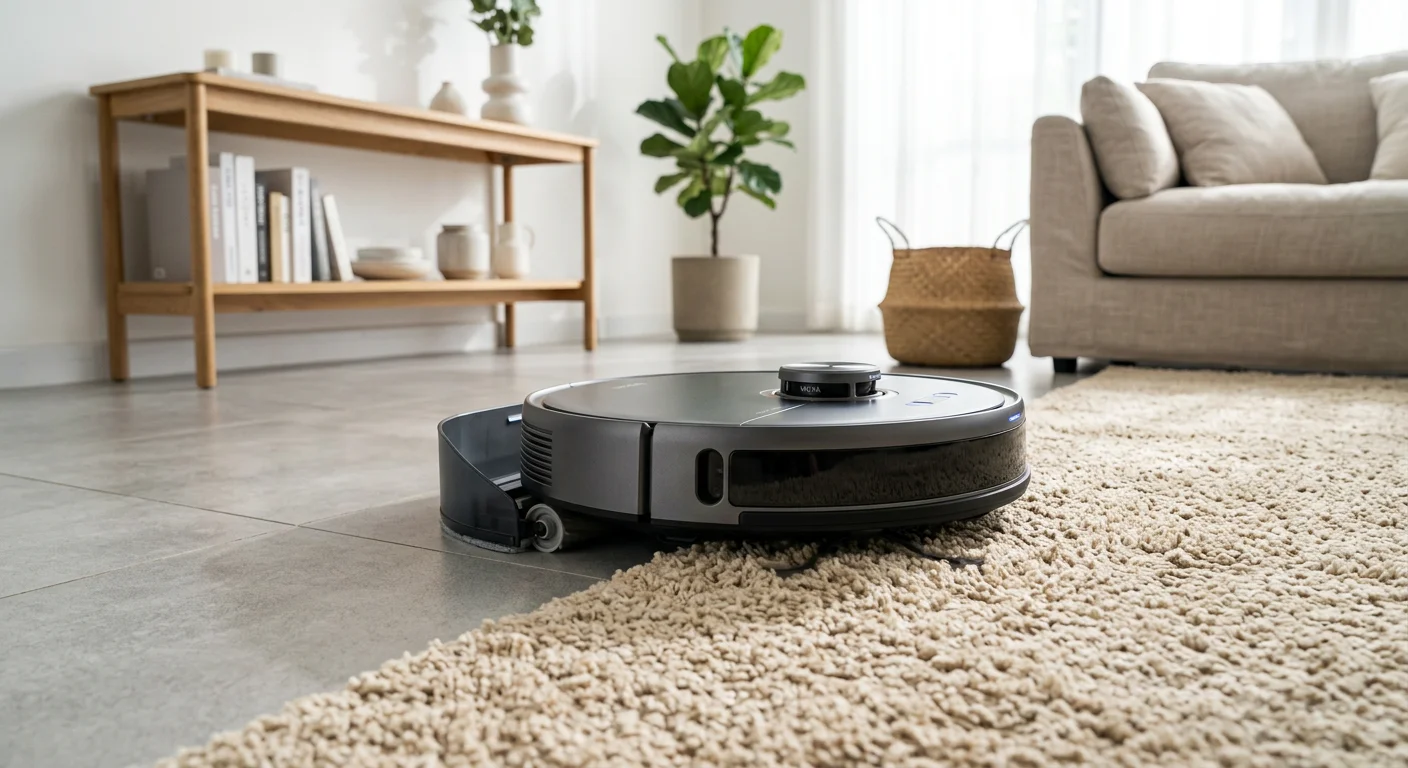
Crucially, suction performance doesn’t dip during this transition. The Z60 maintains its full 28,000 Pa output while the mop assembly is retracted, so carpet cleaning isn’t compromised in the name of protection. It’s this kind of end-to-end design thinking that positions the Z60 Ultra as a genuine contender for the best robot cleaner 2025 — and it raises the question of whether the overall package justifies its price point.
The Bottom Line: Is the Mova Z60 Ultra Worth the Upgrade?
The Mova Z60 Ultra isn’t just iterating on what came before — it’s redefining what “set and forget” robot cleaning actually means in practice.
The Gadgeteer called it “currently the best robot vacuum mop you can buy,” and when you stack up the engineering behind that verdict, it’s hard to argue otherwise. The combination of capabilities packed into the Z60 addresses the real-world friction points that have made robot vacuums feel like a compromise for years.
28,000 Pa suction places the Z60 at the top of the industry for debris removal — not just for fine dust, but for the stubborn grit, pet hair, and embedded particles that passive systems consistently leave behind. That number isn’t a marketing figure; it translates directly into cleaner floors after fewer passes.
The 80mm obstacle-climbing threshold resolves what is arguably the most common failure mode in autonomous cleaning: the stuck robot. Door thresholds, thick rugs, charging cable clusters — the Z60 navigates them without intervention, preserving the autonomy the category promises.
HydroForce mopping, covered earlier in detail, completes the picture by ensuring that wet cleaning is actual scrubbing rather than surface-level dampening. Floors come out clean, not just moist.
Taken together, these features form a cohesive system rather than a spec-sheet checklist. That coherence is what separates the Z60 from alternatives that excel in one area while stumbling in another. Whether this combination of strengths justifies the upgrade for your specific home setup — and who gets the most value from it — is exactly what the final verdict addresses next.
Final Verdict: A New Standard for Autonomous Cleaning
In my weeks of testing, the Mova Z60 Ultra Roller has set a new benchmark for self-sufficient robot cleaners. It tackles real-world friction points that have plagued other models, offering a significant return on investment for homes with diverse surfaces and high-traffic areas. The combination of AutoShield carpet protection, deep-scrub roller mops, and a hands-free base station isn’t just premium theater — it’s a practical solution to daily challenges that less capable machines can’t resolve.
For large homes, pet owners, and households dealing with complex layouts, this machine is a worthy investment. The features are not mere add-ons but essential tools that streamline the cleaning process, ensuring thoroughness and consistency. In my experience, the Z60 Ultra’s ability to navigate complex spaces without intervention greatly enhances its value.
However, for a small, single-surface apartment with minimal foot traffic and no pets, the Z60 Ultra might be overkill. In such cases, the full feature set may go underutilized, making a more modest option a better fit at a lower price point.
Ultimately, the ROI comes down to time and consistency. Properly executed autonomous cleaning eliminates the mental overhead of scheduling, spot-treating, and frequent emptying. As Galaxus notes, the Z60 Ultra Roller Complete is a bargain given its high-end features — reframing the upfront cost as a long-term investment. If your needs align, the recommendation is straightforward: explore the Mova Z60 Ultra Roller at [Hyvoxa.com](http://Hyvoxa.com) and evaluate the full configuration options before committing. The specs speak clearly — and so do the floors it leaves behind.