
The Aesthetic Dilemma: Why Hiding Your Ring Transformer Matters
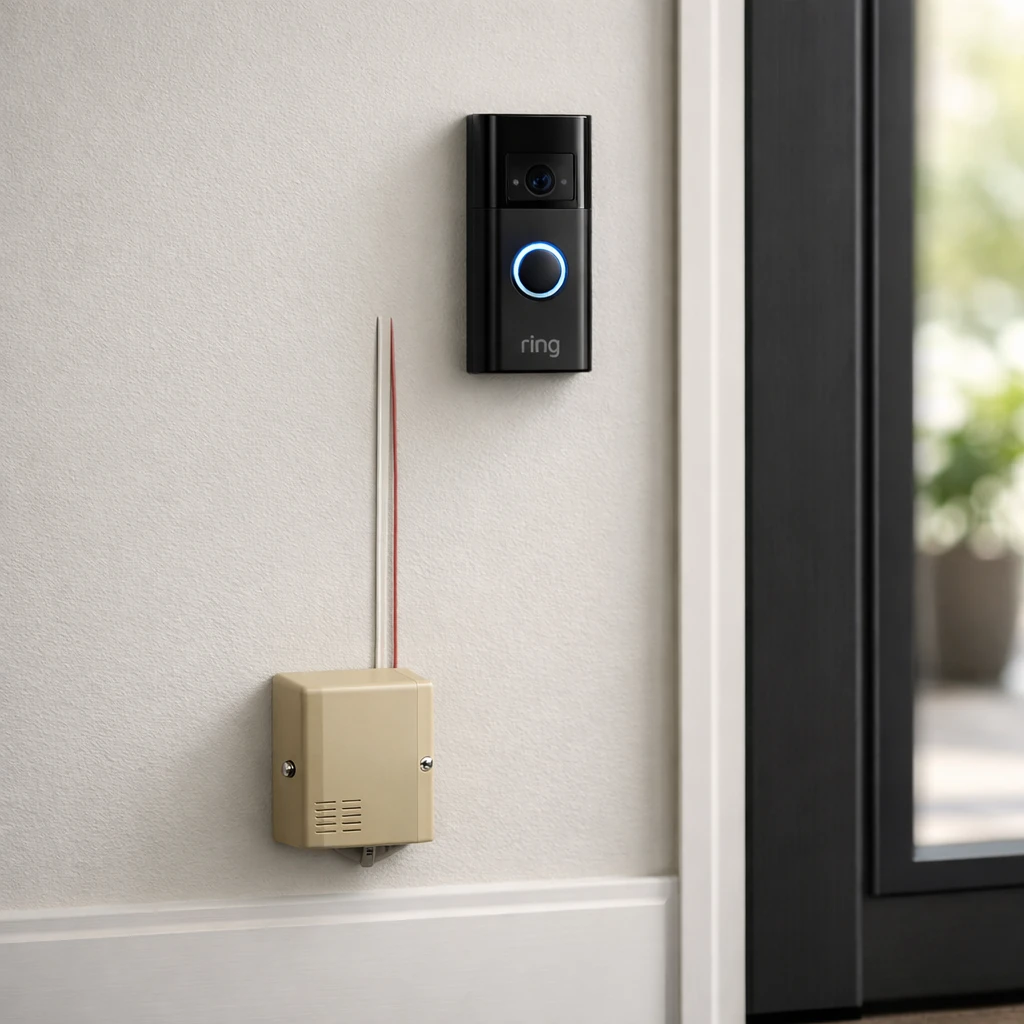
I remember staring at the beige transformer bolted to my hallway baseboard, its wires snaking up like a messy spiderweb to my new Ring Pro. It felt like putting a plastic bumper sticker on a luxury car—a utilitarian eyesore right in the path of every guest. Most homeowners feel that same itch to just “bury it” behind a patch of drywall and forget it exists. But as I’ve learned through years of smart home installs, the biggest pain point isn’t the aesthetic; it’s the inevitable hum and heat that happens when a high-draw Ring doorbell pulls power 24/7 through an undersized, poorly ventilated unit.
In my experience, the mistake most DIYers make is underestimating how much work a low voltage transformer for Ring doorbell power actually does. We aren’t just powering a chime anymore; we’re running a miniature computer with a camera and Wi-Fi radio. After seeing my share of flickering video feeds and “offline” alerts, I realized that concealing a transformer isn’t just a drywall project—it’s an electrical engineering one. This guide covers the safe, code-compliant methods I use to get that hardware out of sight without creating a thermal hazard or a maintenance nightmare.
A bulky transformer bolted to your entryway wall can undermine even the most carefully designed home exterior — and for Ring Pro owners, that hardware isn’t optional.
The Ring Video Doorbell Pro and Pro 2 require a hardwired low voltage transformer for Ring doorbell power, specifically one rated at 16–24 VAC and at least 30 VA for optimal performance, according to Ring Support. Unlike battery-operated alternatives, these models depend entirely on a continuous wired connection — meaning the transformer is a permanent fixture, not a temporary accessory.
That permanence is exactly what makes aesthetics a real concern. In practice, homeowners confronted with an exposed transformer box near their front door face what designers sometimes call “wall acne” — small, utilitarian hardware cluttering an otherwise clean entryway. The impulse to hide it completely is understandable.
Here’s where a common mistake emerges:
- Prioritizing invisible over accessible — sealing a transformer behind drywall with no service access
- Skipping ventilation — enclosing heat-generating components in insulated cavities
- Ignoring code requirements — concealing hardware that inspectors and electricians need to reach
The right approach balances both goals through a Safety First concealment framework: hide the hardware effectively without compromising airflow, access, or compliance. That balance matters more than most homeowners realize — and the reasons why go deeper than aesthetics alone.
The Hidden Danger: Why You Can’t Simply Bury a Transformer
Knowing how to hide a doorbell transformer the right way starts with understanding why the wrong approach can be genuinely dangerous — not just aesthetically imperfect.
Transformers generate heat by design. The process of stepping 120V household current down to the 24V your Ring Pro needs isn’t perfectly efficient. That lost energy escapes as thermal output, and under normal conditions — mounted openly on a joist or utility box — that heat dissipates harmlessly into surrounding air. The problem starts the moment you seal that transformer inside a wall cavity packed with insulation or drywall.
⚠️ Warning: Enclosing a transformer directly behind drywall can cause surface temperatures to exceed 140°F (60°C), a threshold at which surrounding framing, insulation, and paper-faced drywall become genuine fire hazards. (Newhouse Hardware)
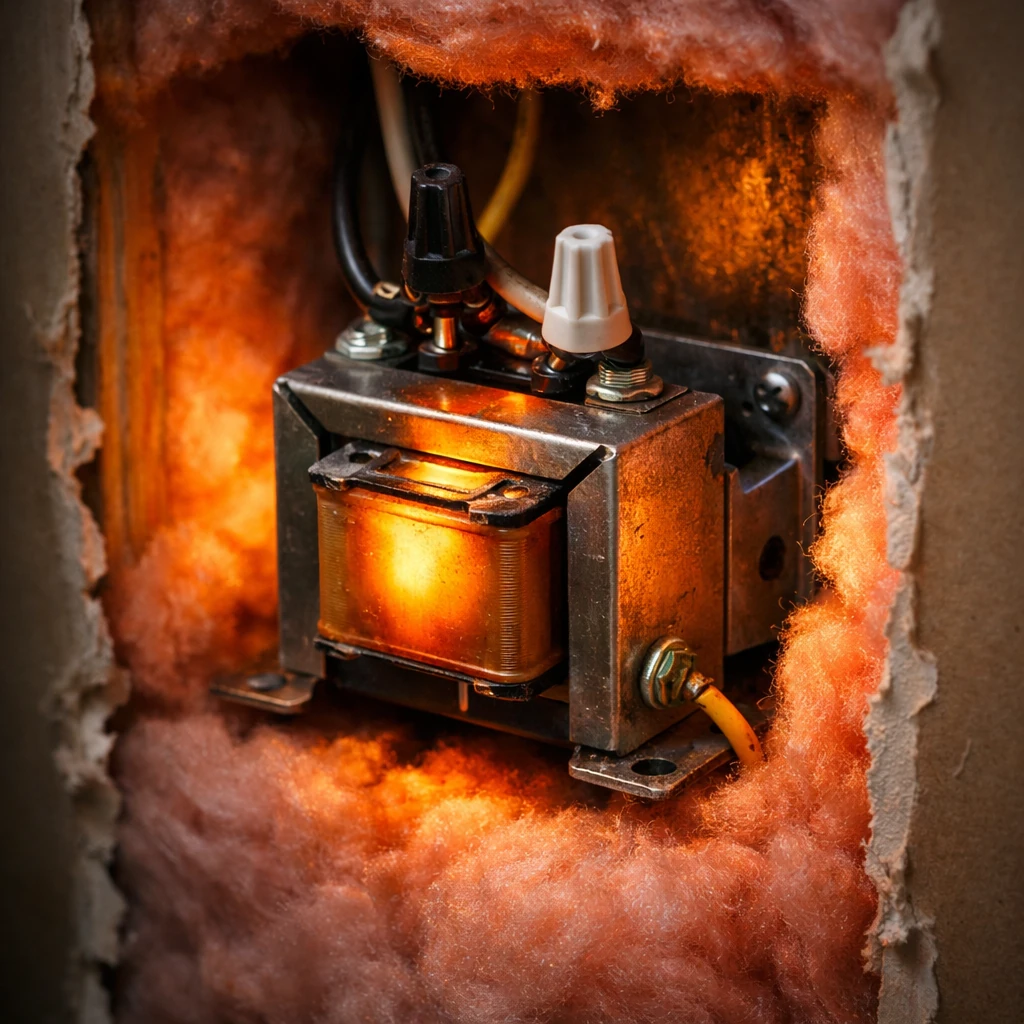
This heat accumulation — sometimes called thermal runaway — is a compounding risk. The more confined the space, the less heat escapes, which drives temperatures higher, which increases resistance, which generates more heat. It’s a cycle that doesn’t self-correct.
Legal exposure matters here too. The National Electrical Code (NEC) requires that electrical equipment be installed in a manner that does not create a fire hazard, and NEC Section 450 specifically mandates that transformers remain accessible for inspection and maintenance. “Hidden” cannot legally mean “permanently sealed behind drywall.” Any concealment method must preserve a clear access path — a requirement that points directly toward recessed junction boxes and access panels, which the next section covers in detail.
Code-Compliant Concealment: Using Recessed Junction Boxes
Meeting Ring doorbell transformer requirements isn’t just about aesthetics — it’s about doing the job in a way that passes inspection and keeps your home safe long-term.
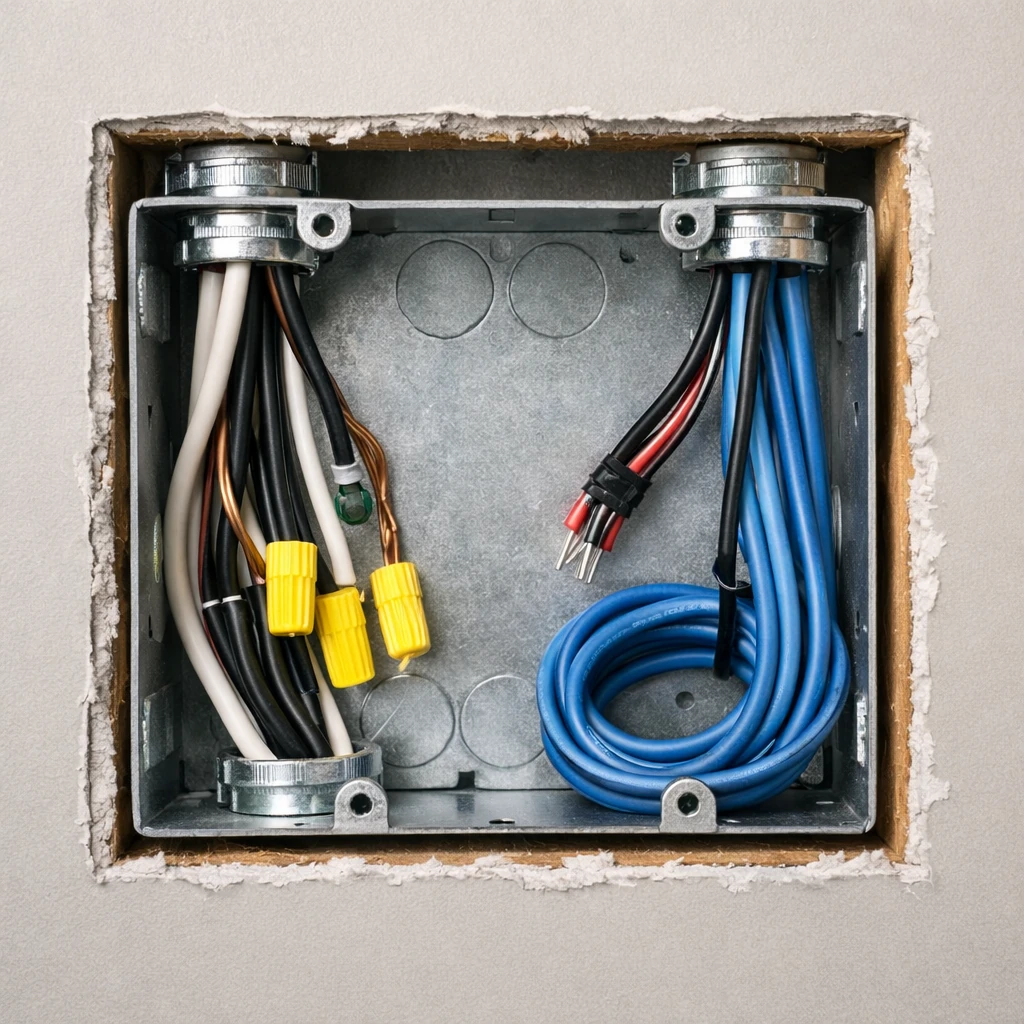
The gold standard for concealing a transformer is a recessed 4×4 deep metal junction box, secured flush inside the wall cavity and covered with a blank wall plate. This approach satisfies NEC Section 725.130, which mandates physical separation between 120V line-voltage wiring and the 16–24V low-voltage side of the circuit. The metal box acts as a barrier, keeping those two wiring systems isolated even within a confined space.
Here’s the essential hardware you’ll need:
- 4×4 deep metal junction box — depth matters; a shallow box creates heat buildup and makes wire management nearly impossible
- Blank metal wall plate — covers the box while maintaining NEC compliance and keeping wires inaccessible
- Separate cable knockouts — route your 120V feed through one knockout and the low-voltage leads through another, never bundled together
- Strain relief connectors — secure both wire types at entry points to prevent movement or chafing
Important: High-voltage and low-voltage wiring must enter through separate knockouts and be physically separated inside the box. Bundling them together violates NEC Section 725.130.
For the cleanest long-term solution, a shallow wall niche with a vented access panel takes this concept further — it allows heat to dissipate naturally while giving you easy access for future troubleshooting. This kind of centralized, organized approach is actually the foundation behind a more advanced option worth knowing about: dedicated structured wiring enclosures designed for whole-home smart systems.
The DIN Rail Alternative for Professional Smart Home Racks
Most homeowners default to mounting a transformer near the front door, but a cleaner, more professional approach centralizes low-voltage power inside a structured wiring enclosure — and that’s exactly where DIN rail mounting shines.
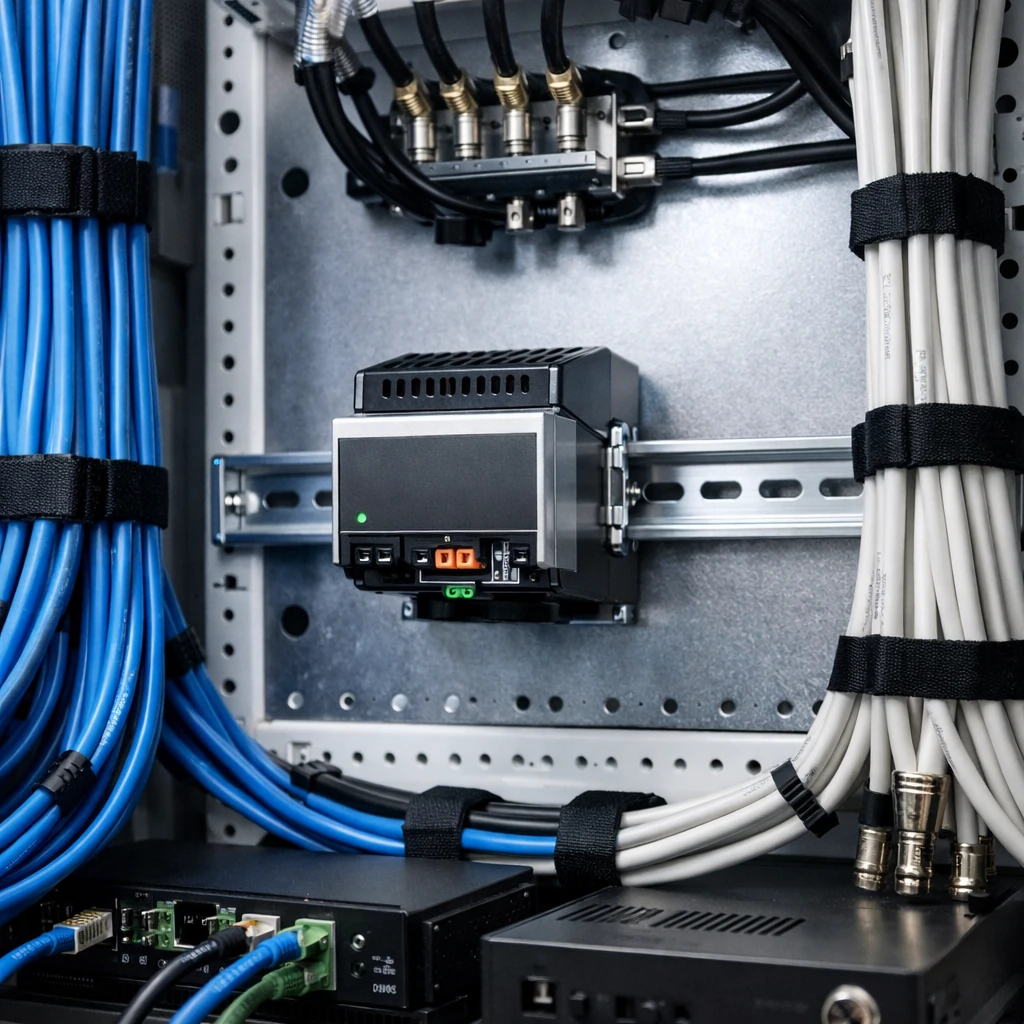
A DIN rail is a standardized metal mounting track, common in electrical panels and structured media closets, that lets compatible devices snap in securely without loose wiring or improvised brackets. Rather than tucking a doorbell transformer in a junction box on a hallway wall, a DIN rail setup routes everything to a single organized hub — typically a media closet, utility room, or low-voltage enclosure.
The practical advantages go beyond looks. DIN rail-mounted components have open airflow on all sides, which meaningfully improves heat dissipation compared to devices wedged into tight recesses. In a dedicated enclosure, you also gain the ability to label circuits, bundle wiring cleanly, and service everything from one location rather than hunting down hardware spread across multiple walls.
Ring addresses this use case directly: the company offers a specific DIN Rail Transformer engineered to snap onto standard rails inside structured wiring panels, making it a natural fit for whole-home automation builds. It’s purpose-built compatibility — not a workaround.
This centralized approach does require fishing wire from the media closet to the front door, which is a longer run but a far more organized result. That’s precisely what the next section covers: how to plan the wire path and execute a clean hardwired installation from start to finish.
Installation Step-by-Step: Hardwiring Without the Mess
A clean hardwired install comes down to four decisions made in the right order — location, wire path, power connection, and final verification.
The sequence matters as much as the individual steps. Skipping ahead or wiring blind is how DIYers end up with exposed cables and failed inspections. Here’s how to do it right.
- Choose your mounting location. A closet interior wall is the cleanest option — it keeps the transformer out of sight and gives you room to work. A hallway wall near the electrical panel is a solid second choice. Avoid exterior walls where insulation complicates wire fishing.
- Fish low-voltage wire through wall cavities. Use an 18-gauge, two-conductor bell wire. A flexible drill bit and glow rods make routing through stud bays significantly easier without tearing open drywall.
- Connect to the 120V line side. Tie into a nearby outlet circuit inside the wall cavity using a properly secured junction box. Keep 120V wiring physically separated from your low-voltage doorbell runs at all times.
- Test VAC output before mounting. Use a multimeter to confirm 16–24 VAC at the transformer terminals. Per Ring’s installation guidance, using a transformer under 30 VA frequently causes the doorbell to disconnect or fail to ring the internal chime — a problem that’s far easier to catch now than after everything is buttoned up.
Pro-Tip: Never downsize to 20-gauge wire to save a few dollars. Thinner wire increases resistance over longer runs, which can drop voltage below the Ring Pro’s minimum threshold — exactly the kind of issue that turns a clean Ring DIN rail transformer installation into a frustrating troubleshooting session.
With the hardware verified and wires properly routed, there are a few foundational rules worth keeping front of mind before calling the job complete.
The Bottom Line: Expertise and Safety First
Wrapping up a hardwired installation feels great, but the real test comes six months later when the seasons change and your transformer has been running under load. I’ve gone back to enough “finished” jobs to know that the difference between a pro install and a fire hazard is often just a $10 vented wall plate. When I consult on these setups, I always emphasize that while a video doorbell transformer hardwired into the wall looks better, its accessibility is what matters for the life of your home. If you can’t get to it with a multimeter in thirty seconds, it shouldn’t be in your wall.
My final piece of expertise is this: don’t settle for the bare minimum 16V/10VA transformer often found in hardware store bins. If you’re taking the time to open your walls and install a recessed junction box, put in a 24V/30VA unit from the start. It provides the “clean” power necessary to prevent the digital lag and night-vision resets that plague most Ring Pro owners. By following these safety-first concealment rules, you aren’t just hiding a box; you’re building a reliable foundation for your smart home security that will pass an inspection—and a thermal camera test—any day of the week.
Getting a video doorbell transformer hardwired installation into your wall cleanly and safely comes down to a handful of non-negotiable rules — ignore one, and you risk code violations, fire hazards, or a doorbell that simply won’t perform.
Never bury a transformer directly in drywall. According to home improvement best practices, a recessed junction box with a vented cover is the correct method for concealing a transformer within a wall — it keeps the unit accessible for future servicing and allows heat to dissipate safely. Skipping this step isn’t just sloppy; it’s a code violation in most jurisdictions.
Beyond the enclosure itself, voltage and VA ratings matter more than most homeowners realize. Ring Pro models specifically require 16–24 VAC and a minimum of 30 VA — undersupply either figure and you’ll face connectivity drops, failed motion alerts, or a doorbell that bricks itself mid-winter. Ring’s own installation guidance confirms these specs as mandatory, not suggested.
Physical separation between 120V house wiring and 24V doorbell conductors is equally critical. Routing both through the same knockout without a divider creates induction interference and, in worst-case scenarios, a shock risk if insulation degrades.
On the other hand, vented covers or recessed niches give you a clean finish without sacrificing airflow — a practical compromise for high-traffic areas like entryways. When local code interpretation feels murky, consulting a licensed electrician is always the right call. The cost of a short consult is far less than a failed inspection or a recalled permit. The components you choose for that final installation are just as important as the technique — which is exactly what the next section addresses.
Choosing the Right Hardware for Your Hyvoxa Smart Home
A hardwired video doorbell is only as reliable as the components behind the wall — and that’s exactly where most DIY installs quietly fail over time.
Throughout this guide, the recurring theme has been precision: the right transformer voltage, clean wire routing, a properly rated junction box, and a safe power connection. None of that effort pays off long-term if the hardware itself is undersized or mismatched for a modern smart home environment.
Quality components aren’t optional in a permanent hardwired setup. A transformer that runs at the edge of its rated capacity, or low-gauge wiring pulled through a tight conduit run, introduces failure points that surface months later — often at the worst possible time. Every permanent installation deserves hardware selected with headroom, not just minimum compliance.
That’s where [Hyvoxa.com](http://Hyvoxa.com) comes in. Hyvoxa provides expert insights into safe and efficient smart home power management, helping DIY homeowners move beyond guesswork and toward configurations that actually hold up. Whether you’re troubleshooting an existing setup or planning a full smart home integration, the resource base is built around practical, reliable guidance.
The clearest next step is straightforward: audit your current doorbell power supply before assuming everything is fine. Check your transformer’s VA rating, inspect your wire gauge, and confirm your chime compatibility. Explore Hyvoxa’s resources to find guidance tailored to advanced smart home setups — and build the confidence to do the job right the first time.