
The State of the Matter Standard in 2025
Matter has crossed the threshold from promising concept to dominant market infrastructure — and the latest matter smart home news confirms the shift is accelerating faster than most analysts predicted.
The skepticism was understandable. Early adopters in 2023 and 2024 encountered real friction: incomplete device support, sluggish certification pipelines, and ecosystems that still felt siloed despite the standard’s interoperability promises. That criticism was fair at the time. However, the 2025 picture looks fundamentally different.
According to MarketIntelo, Matter-certified devices are projected to represent 34% of all global smart home device shipments by 2025, up from just 8% in 2023. That is not incremental progress — that is a category-defining leap. Over 4,800 certified Matter devices are now available globally, giving consumers real purchasing choice across price points and product categories.
Perhaps more telling is where adoption is growing. Matter is no longer confined to smart bulbs and door locks. White goods manufacturers and HVAC brands are now building native Matter support directly into appliances — a signal that 2025 is the year the standard becomes the baseline expectation for connected home infrastructure, not an optional upgrade.
The “broken promises” narrative belongs to 2023. The foundation being laid now — particularly around infrastructure improvements arriving with Matter 1.4 — is precisely what’s resolving those earlier shortcomings.

Matter 1.4 directly attacks the root cause of smart home fragmentation by rethinking the network layer itself — not just the devices sitting on top of it.
For years, building a reliable smart home meant accumulating a collection of proprietary bridges, dongles, and protocol-specific hubs. Every ecosystem demanded its own smart home hub, and those hubs rarely communicated cleanly with each other. The result was a tangle of parallel networks running in the same house, each one a silo.
According to the Connectivity Standards Alliance, Matter 1.4 introduced formal support for Home Routers and Access Points (HRAP) — a structural shift that allows standard network hardware to function as Thread Border Routers natively. That single change collapses several layers of redundant hardware into infrastructure most households already own.
When your router becomes a Thread Border Router, you no longer need a separate bridge just to get devices talking.
The HRAP specification delivers practical benefits that compound over time:
Simplified network topology — fewer physical devices managing protocol translation
Lower hardware costs — no need to purchase proprietary bridging equipment per ecosystem
Standardized credential management — a unified directory handles device authentication across the network
Reduced failure points — fewer bridges means fewer single points of breakdown
The unified credential directory is worth emphasizing on its own. Previously, each platform maintained its own device registry, which meant adding a new device often required navigating multiple authentication layers. Matter 1.4 moves toward a single, standardized credential store — a meaningful step forward in reducing onboarding complexity at the infrastructure level. That groundwork quietly sets the stage for what comes next: making the actual setup experience feel effortless from the moment a device comes out of the box.
Eliminating Setup Friction with NFC and Tap-to-Pair
The single biggest barrier keeping general consumers away from smart home tech has never been the price — it’s been the setup experience. Even with Matter already simplifying cross-brand compatibility, the onboarding process still required users to hunt down a QR code, open an app, hold their phone at exactly the right angle, and hope for the best. For anyone who doesn’t find that routine second nature, it’s enough friction to abandon the whole project.
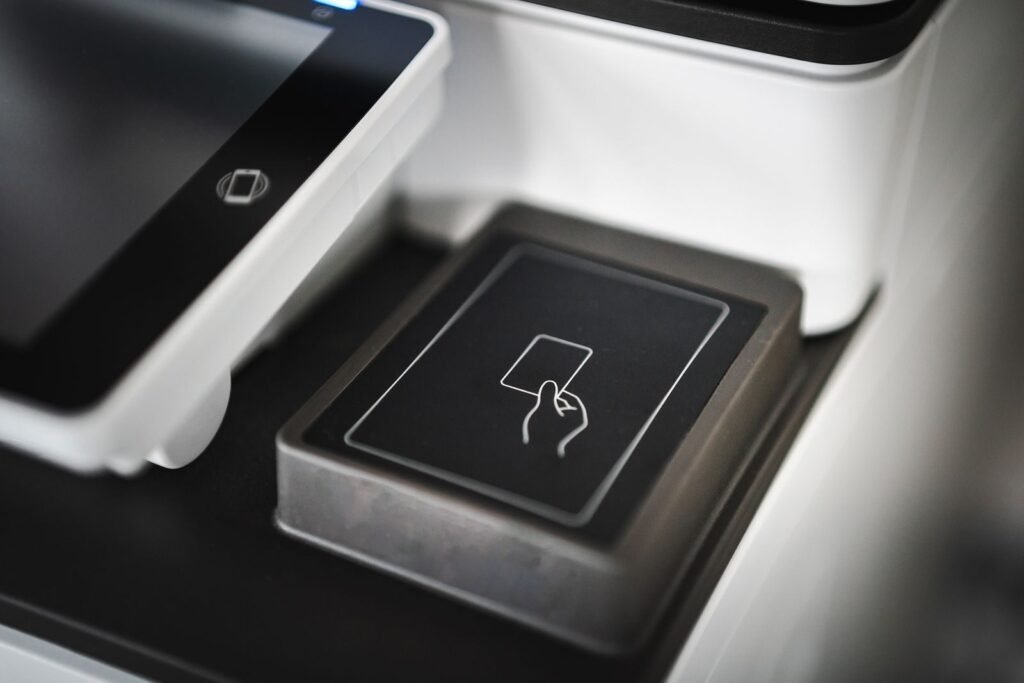
Matter 1.4 directly addresses this with two meaningful updates. NFC tap-to-pair replaces the QR scanning ritual entirely — a user simply holds their phone near a new device and pairing begins automatically. No squinting at tiny codes printed on the back of a light switch. No failed scans under bad lighting. The interaction is instant and intuitive, closer to tapping a transit card than configuring a network device.
The second update is equally practical: multi-device QR codes allow an entire batch of devices to be onboarded through a single scan. In practice, this transforms bulk setups — think outfitting a new apartment with a dozen smart fixtures — from a repetitive chore into a streamlined process. Forbes reports these additions were specifically designed to reduce setup friction at the point of first use.
“The ‘out of box’ experience is where smart home adoption is won or lost — if someone struggles in the first ten minutes, they rarely return.”
This shift matters most for the consumer who wants a reliable home automation smart hub experience without a learning curve. However, it also signals something broader: Matter’s development is no longer focused solely on technical depth. It’s actively optimizing for accessibility — which sets up an interesting question about what that means for the hub itself.
Why the Smart Home Hub is Finally Evolving
The smart home hub’s role is fundamentally shifting — from a proprietary gatekeeper to a genuinely open controller that serves users instead of locking them in.
For years, the hub model was built around captivity. You bought a hub from one manufacturer, and everything had to flow through that company’s ecosystem. Switching meant starting over. The hub wasn’t a tool; it was a fence.
Matter 1.4 update this dynamic at the infrastructure level. As the Connectivity Standards Alliance confirms, Matter 1.4 enables routers to act as certified Matter controllers — meaning the standalone proprietary hub is no longer a prerequisite. That single shift dissolves the walled garden model more effectively than any industry agreement ever could.
What this unlocks is genuine consumer choice. Previously, hub selection was driven almost entirely by device compatibility — you picked the hub that worked with the most stuff you already owned. Now, with cross-manufacturer interoperability baked into the standard, users can finally choose a hub based on interface quality, app design, and user experience. The best UI wins, not the biggest proprietary catalog.
Cross-manufacturer product updates in 2025 are reinforcing this shift. As Matter-certified devices are proliferating across brands, firmware and feature updates increasingly follow open standards rather than closed pipelines. A device bought today should improve over time regardless of which hub manages it.
A Matter-first hub is the only future-proof investment — anything built around a proprietary protocol is a depreciating asset. Given how quickly the ecosystem is maturing, it’s worth asking why so many consumers have been slow to embrace this shift. That question deserves a direct answer.
Addressing the Skepticism: Why Hasn’t it Caught On Faster?
Matter’s slower-than-expected consumer adoption isn’t a mystery — it’s the predictable result of three compounding friction points that earlier versions of the standard failed to solve.
The “Complexity Tax” was real. Early smart home automation hub setups demanded router configurations, VLAN segmentation, and app-hopping across incompatible ecosystems. As XDA-Developers noted after spending time with the standard, many early adopters were genuinely disappointed — but Matter 1.4 directly addresses those core infrastructure flaws rather than papering over them.
The “Reliability Gap” eroded trust just as fast. Cloud-dependent devices introduced unpredictable latency and single points of failure — your light switch shouldn’t stop working because a data center in Virginia had a bad afternoon. Matter’s local-first control model eliminates that dependency entirely, keeping commands on your home network where response times are measured in milliseconds, not seconds.
The “Price Barrier” is collapsing on its own timeline. Mass production of Matter-certified silicon is driving per-chip costs down steadily, pulling certified devices into mainstream retail price brackets.
Taken together, these three fixes converge at exactly the right moment. 2025 represents a genuine inflection point: the ecosystem has reached critical device mass, setup friction has been engineered away, and the cost curve is finally working in consumers’ favor. What’s left is understanding which features actually matter when you’re choosing new hardware — and that’s precisely where the decision gets interesting.
The Bottom Line: What You Need to Know
Matter 1.4 is the most consequential update the smart home standard has seen — and for everyday homeowners, that shift is already becoming tangible.
Matter 1.4 marks the moment interoperability stopped being a promise and started being a deliverable. According to the CSA, the number of matter certified devices 2025 buyers will encounter has grown substantially, with over 34% of new smart home devices now carrying Matter certification — a tipping point that makes fragmented ecosystems increasingly hard to justify.
NFC commissioning and HRAP are the standout features that finally solve the two problems that frustrated early adopters most: painful setup and unreliable remote access. As covered in earlier sections, these aren’t incremental tweaks — they’re structural fixes that remove the friction that kept mainstream consumers on the sidelines. Matter 1.4’s energy management additions further extend its relevance beyond convenience into real utility savings.
For anyone buying a smart home hub today, Matter and Thread support are non-negotiable criteria. A hub without them is already behind the curve — and the gap will only widen as the ecosystem accelerates. The security improvements in Matter 1.4.2 add another layer of confidence for security-conscious buyers.
The open smart home isn’t a future concept anymore. With the right platform behind it, it’s something you can build right now — which is exactly what the next section explores.
Future-Proofing Your Home with Hyvoxa

The open smart home is no longer a promise — it’s a platform, and Matter 1.4 signals that the ecosystem is reaching genuine maturity. For homeowners ready to act on that momentum, the next step isn’t buying more devices. It’s choosing the right layer to manage them.
Hyvoxa is built for exactly this moment. As Matter 1.4 expands device categories and tightens interoperability standards, the real challenge shifts from connectivity to clarity — making sense of a growing, multi-vendor ecosystem without losing visibility or control. Hyvoxa addresses that gap with a unified dashboard that treats every Matter-certified device the same, regardless of which brand made it.
In practice, that unified view eliminates the friction that frustrates most smart home owners: switching between apps, rebuilding automations when one device changes, and losing context across rooms. A single coherent picture of your home is the automation upgrade most people don’t realize they need.
For homeowners looking to upgrade their hub or build a new setup from scratch, the path forward is straightforward — audit what you own, confirm Matter 1.4 compatibility, and center your stack around a platform that grows with the standard rather than against it. As Matter 1.5 is expected to move toward cameras and expanded closures, the ecosystem will only accelerate.
Explore Hyvoxa’s Matter-compatible solutions to see how a smarter hub makes every device — and every future update — work harder for you.
Final Thoughts: Why I’m Finally Clearing Out My Bridge Drawer
Ultimately, my years of experience in the smart home industry have taught me that the best technology is the kind that becomes invisible. For a long time, “smart” tech was loud—constantly demanding firmware updates, requiring redundant apps, and forcing hardware upgrades just to keep basic automations running. Matter 1.4 is the quiet revolution we’ve been waiting for. It’s the update that allows me to walk into a room and trust that the lights, the thermostat, and the sensors will work in unison, regardless of the logo on the box.
If you’re looking to start your journey or overhaul a legacy setup, my professional recommendation is to prioritize 1.4-certified controllers. The shift to native Thread Border Router support within your existing networking gear is the single best way to future-proof your home and reduce failure points. As we head into 2025, the barrier to entry has never been lower, but the ceiling for reliability has never been higher. Don’t just build a smart home; build an open one that respects your time and your privacy.
Conclusion: A New Baseline for the Connected Home
I’ve spent the better part of a decade explaining to frustrated homeowners why their expensive ‘smart’ devices couldn’t talk to each other. For the first time, I can stop making those excuses. Matter 1.4 isn’t just a technical achievement; it’s a professional relief. By moving from a world of proprietary bridges to a world of shared infrastructure, we’re finally seeing the smart home become what it was always meant to be: invisible, reliable, and helpful.
As we move into 2025, my advice to clients has shifted from “buy this specific brand” to “look for the Matter logo.” The surge in matter certified devices 2025 isn’t just a trend—it’s the new standard for a future-proof home. Whether you’re just starting your automation journey or, like me, you’re looking to finally retire a drawer full of old hubs, Matter 1.4 is the clear signal that the turning point has arrived. It’s time to stop managing your home and start living in it.