
The Invisible Power Gap in Modern Doorbell Wiring
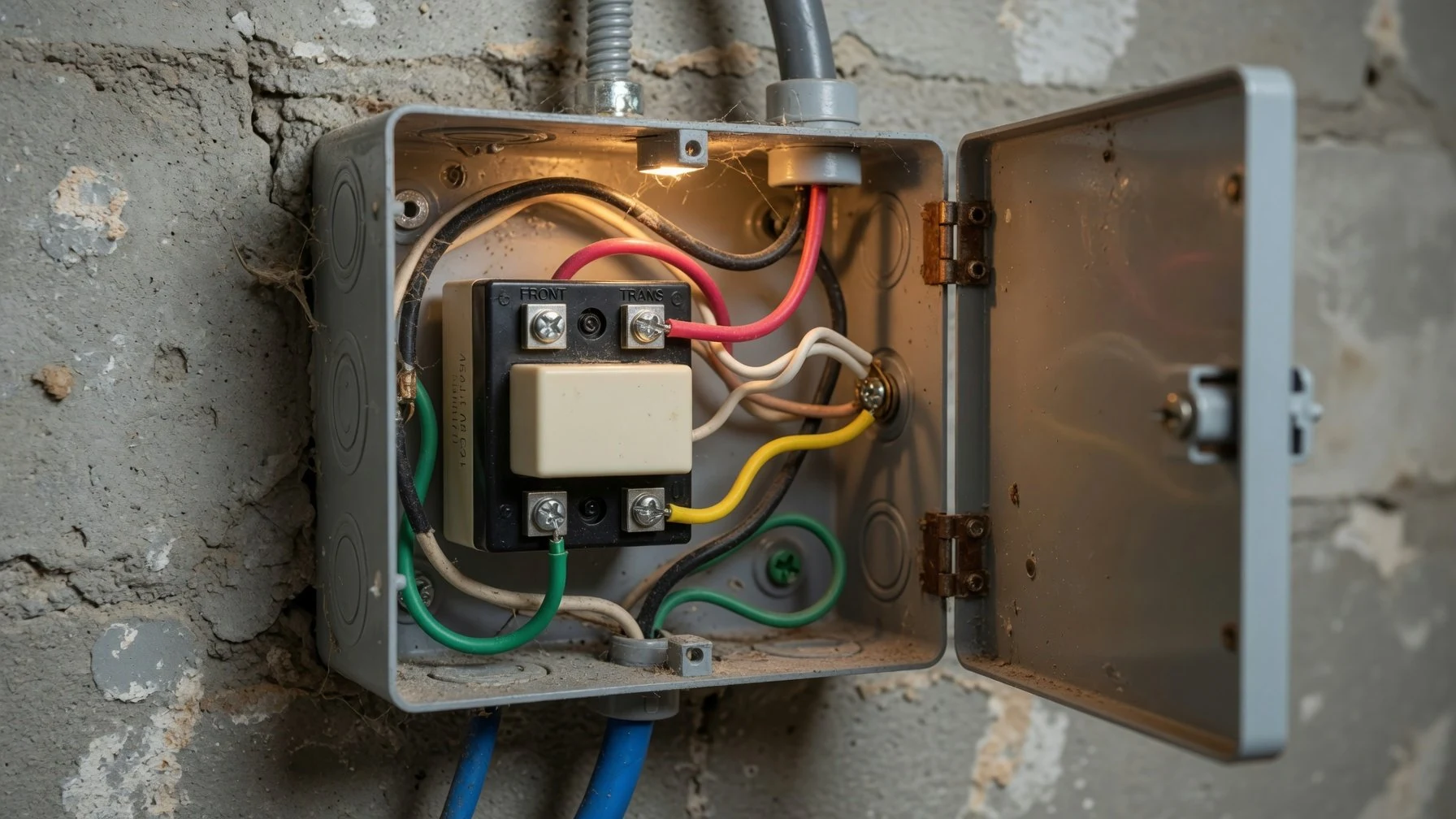
Your smart doorbell isn’t failing because of a bad Wi-Fi signal or a faulty device — it’s starving for power at the source.
Traditional doorbells were elegantly simple. They needed nothing more than a brief electrical pulse to strike a mechanical chime, then went dormant until the next button press. The old transformer wiring designed around that logic made perfect sense for decades. But smart doorbells operate on an entirely different energy model — they’re always-on computers running continuous video streams, motion detection algorithms, and live Wi-Fi connections around the clock.
That mismatch creates a predictable set of symptoms: intermittent connectivity dropouts, delayed notifications, and the frustrating phenomenon homeowners call “ghost ringing” — the doorbell triggering with no one at the door. These aren’t software bugs. They’re the hardware equivalent of running a high-performance appliance on an undersized circuit.
The critical stat: standard household transformers often deliver around 10VA — less than one-third of the 30VA that modern video doorbells typically require.
The industry has responded with a clear benchmark. Most video doorbell manufacturers now specify a 16V/30VA transformer as the minimum standard for stable operation. Everything else — the apps, the alerts, the HD footage — depends on getting that foundation right.
Understanding this begins with examining the doorbell transformer wiring diagram, which reveals exactly where the old system ends and the new demands begin.
Decoding the Doorbell Transformer Wiring Diagram
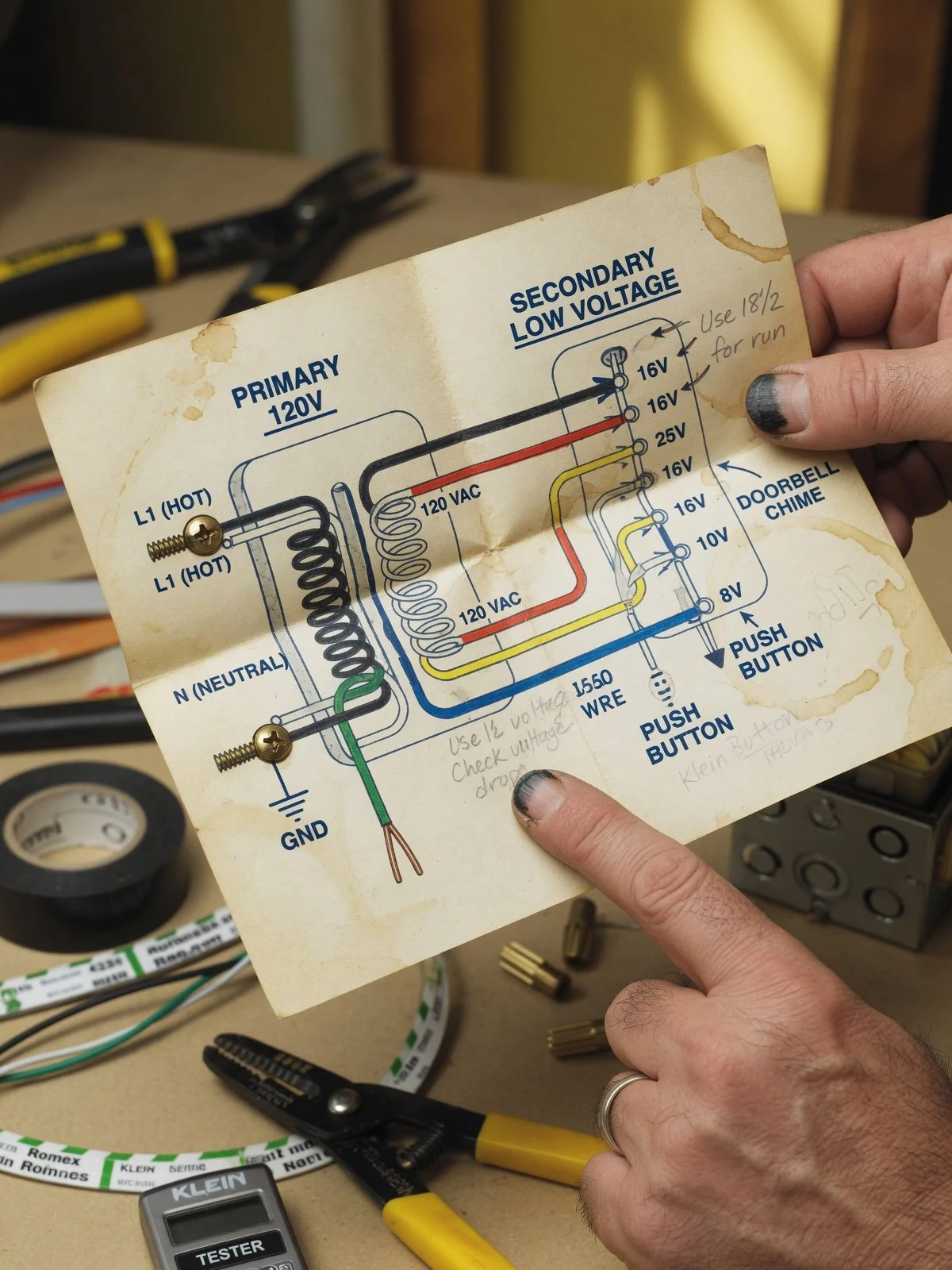
A doorbell transformer is a two-sided device — and confusing those two sides is one of the most common (and dangerous) mistakes homeowners make.
Understanding door chime transformer wiring involves recognizing that the transformer acts as a wall between your home’s full electrical system and the low-voltage circuit your doorbell runs on. According to ADT, standard residential transformers step down 110–120V household current to a low-voltage range of 10–24V AC — a significant drop that makes the secondary side safe to handle, but doesn’t mean the primary side is forgiving.
The primary side connects directly to your home’s electrical panel. It carries three wires:
Black — hot wire (live current)
White — neutral wire
Green — ground wire
⚠️ Always shut off the breaker before touching any primary-side wiring. The 120V primary side carries enough current to cause serious injury or death.
The secondary side is where the low-voltage output exits the transformer via two small terminal screws. This is where your doorbell and chime wires connect. Unlike the primary side, polarity on the secondary side is generally forgiving — most chimes and buttons will work regardless of which terminal wire goes where.
Mounting location also matters more than people expect. Transformers are typically found in one of two places: mounted directly to a junction box (often near the electrical panel) or tucked inside a light-switch box. The junction box mount gives easier access and better heat dissipation — a practical advantage when upgrading to a higher-VA transformer for a smart doorbell.
Once you understand this physical layout, the next logical question becomes which numbers on those terminal screws actually matter — and that’s where voltage versus volt-amps becomes the real story.
The Critical Math: Voltage vs. Volt-Amps (VA)
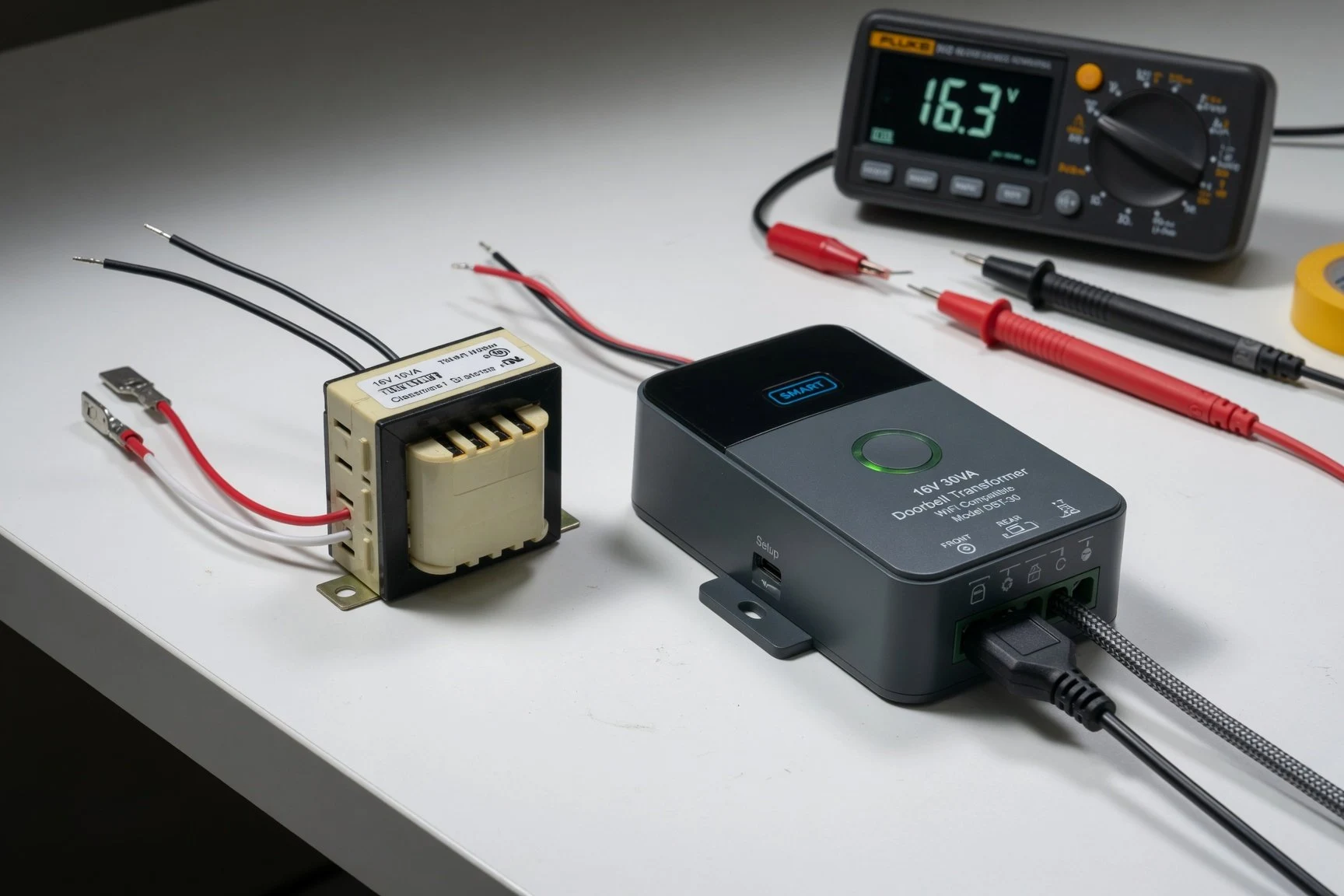
Picking the wrong transformer spec is the fastest way to destroy a perfectly good smart doorbell — and the mistake almost always comes down to confusing two related but very different numbers.
Voltage (V) controls the electrical “pressure” delivered to your chime and button. More voltage than the device is rated for doesn’t give it extra power — it overwhelms it. As 1800doorbell notes, using a 24V transformer on a 16V-rated chime can cause immediate damage. This is especially relevant when learning how to wire a doorbell transformer, because grabbing the wrong unit from the hardware shelf is an easy mistake to make.
Volt-Amps (VA), on the other hand, represent the system’s total capacity — think of it as the size of the pipe, not the pressure inside it. A higher VA rating is generally safe because your doorbell draws only the power it actually needs. Where voltage mismatch causes damage, a VA mismatch typically causes brownouts and resets. Most traditional chimes run fine on 10VA, but smart doorbells commonly require 20–40VA to power Wi-Fi radios, cameras, and internal charging circuits.
Pro Tip: When in doubt on VA, size up — not down. A 40VA transformer powering a device that needs only 20VA causes no harm whatsoever.
A Tri-Volt transformer offers an elegant solution when your household has mixed hardware — perhaps an older mechanical chime alongside a new video doorbell. These units support multiple voltage outputs (typically 8V, 16V, and 24V) from a single device, eliminating the guesswork entirely. Once you understand these two specs clearly, the physical installation becomes much more straightforward — which is exactly what we’ll tackle next.
Step-by-Step: Installing a Hardwired Transformer Kit
Replacing a doorbell transformer is one of the more approachable electrical tasks a homeowner can take on — but only when done in the right sequence. Before you touch a single wire, pull up your doorbell transformer wiring diagram so you’re clear on which terminals handle high-voltage house power and which handle low-voltage bell wiring. That single reference prevents the most costly mistakes.
⚠️ Safety Warning: Always verify power is off with a non-contact voltage tester before handling any wiring. Never assume flipping the breaker is enough — confirm it.
Here’s the correct installation order:
Kill the circuit and verify it. Switch off the breaker controlling the doorbell circuit, then hold a non-contact voltage tester against both the black and white house wires inside the electrical box. No beep or light confirms it’s safe to proceed.
Disconnect the old transformer. Unscrew the wire nuts joining the transformer’s leads to the black (hot) and white (neutral) house wires. Set the old unit aside without letting the house wires fall back into the box.
Mount the new transformer. Most units thread directly onto a knockout hole on the side of the electrical junction box. Tighten the locking ring firmly so the transformer is secure.
Connect the low-voltage terminals. Attach your existing bell wires to the screw terminals on the transformer’s low-voltage side. Note that smart video doorbells frequently require at least 30VA to avoid system failures — confirm your new unit meets that threshold before buttoning everything up.
Once the box is closed and power restored, even a correctly installed transformer can underperform if your wiring runs are unusually long — which is exactly where the next complication tends to surface.
Solving the ‘Voltage Drop’ in Long Wiring Runs
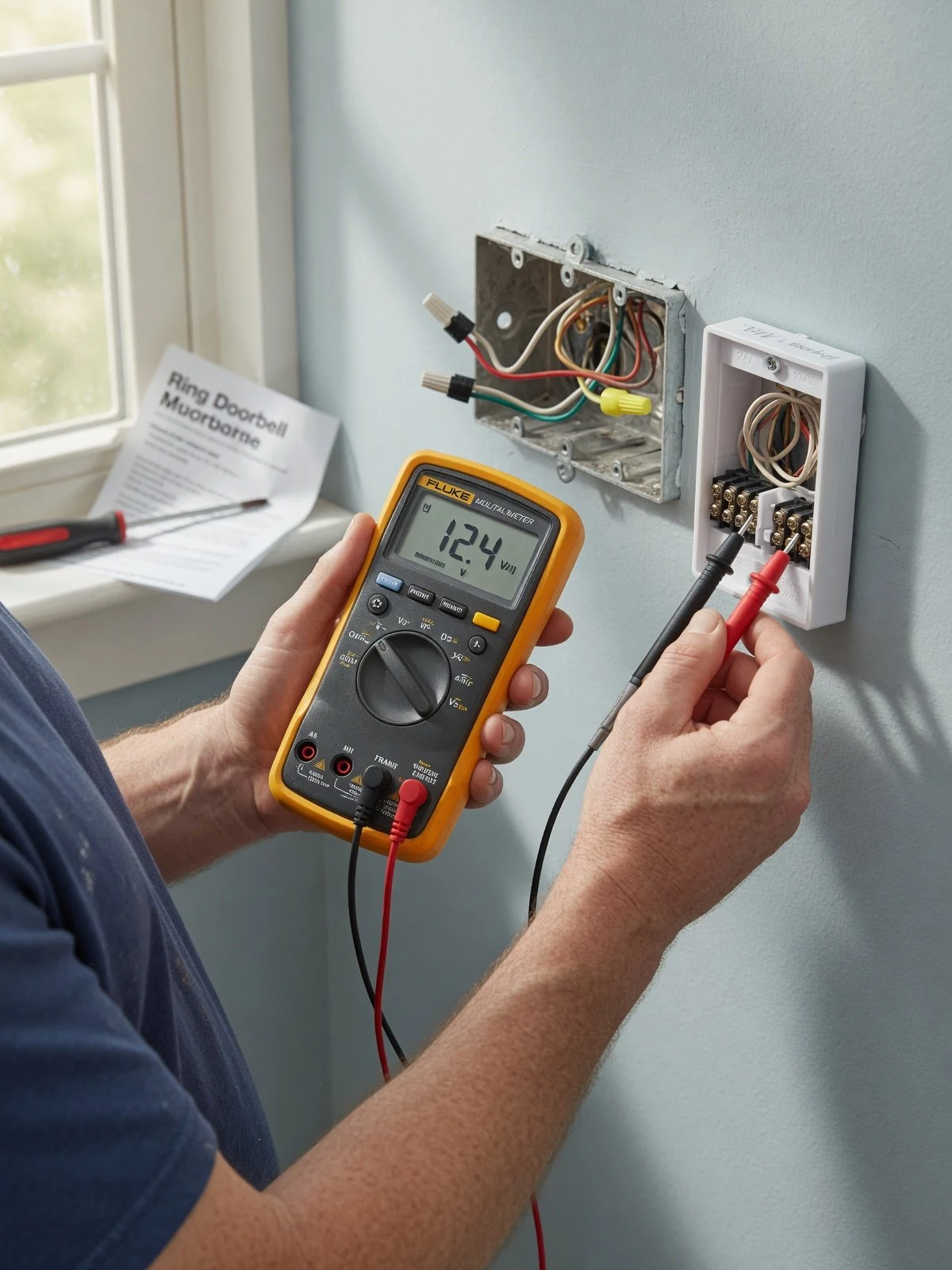
Voltage drop is one of the most overlooked reasons a hardwired transformer setup fails — even when the transformer itself is perfectly spec’d.
The core problem: electrical resistance accumulates over distance. Every foot of wire between your transformer and doorbell introduces resistance, and that resistance bleeds off voltage before it ever reaches the device. A transformer outputting a clean 16V at the panel might deliver only 12V or 13V by the time the signal travels across a sprawling first floor or up two stories.
Wire gauge compounds the issue significantly. Thinner wire — specifically 20-22 AWG, which is common in older homes — has higher resistance per foot than heavier 16 or 18 AWG wire. In practice, thin-gauge wiring in a long run creates a double penalty: more resistance from the distance and more resistance from the wire itself. The result is a doorbell that struggles to charge, drops Wi-Fi connectivity, or fails to trigger the chime reliably.
The 70-foot rule gives you a clear action point. According to Blair Gilbert of Mr. Hardware, for wiring runs exceeding 70 feet, a 24V transformer is recommended over a 16V unit to compensate for natural voltage drop. The higher starting voltage provides enough headroom to absorb that resistance loss and still deliver sufficient power at the endpoint.
Testing confirms what specs can’t guarantee. Set a multimeter to AC voltage and measure directly at the doorbell terminals — not at the transformer. If you’re reading below the manufacturer’s minimum (often 16V), your run length or wire gauge is the culprit. This simple test takes under two minutes and removes all guesswork before you start swapping hardware.
With voltage drop now accounted for, the next step is pulling together every key decision — voltage, VA rating, wire length, and gauge — into a final, actionable checklist.
The Bottom Line: Key Takeaways for a Stable Setup
A stable smart doorbell setup comes down to matching the right transformer specs to your specific wiring layout — get that wrong, and no amount of troubleshooting will fix the problem.
After walking through voltage drop calculations and the mechanics of installing a hardwired transformer kit, four principles consistently separate a reliable setup from a frustrating one.
Always verify the VA rating first. Most modern smart doorbells require 30VA at minimum. As ADT notes, smart devices generally demand a 16V or 24V transformer — but voltage alone doesn’t tell the full story. A transformer rated at 16V/10VA will starve a power-hungry device even at the correct voltage.
Never overvolt your chime. Running 24V into a chime rated for 16V isn’t just bad for performance — it’s a fire hazard. Always cross-reference your chime’s voltage ceiling before upgrading.
Use 24V for runs over 70 feet. Natural resistance across longer wire runs steals voltage before it reaches the doorbell. A 24V transformer absorbs that drop where a 16V unit can’t.
A Tri-Volt transformer future-proofs your system. With selectable output settings, it adapts to whatever device you install next — no rewiring required.
The right transformer is a one-time decision that pays off for years. That said, some wiring situations go beyond straightforward swaps — which is exactly what the next section covers.
When to Call a Professional for Your Doorbell Wiring
Knowing when to stop and call a licensed electrician is just as important as knowing how to diagnose your transformer setup. Smart doorbell wiring rewards careful preparation — but a few situations genuinely warrant professional help.
Messy junction boxes are the first red flag. Old doorbell transformers are often wired directly into electrical boxes with no color-coding, no labeling, and wires that have been spliced, re-spliced, and buried under decades of other work, making confident identification difficult even for experienced DIYers. Pulling the wrong wire in that environment can create a safety hazard — not just a failed install.
Main breaker panel access raises the stakes further. If your transformer is mounted inside or immediately adjacent to the main panel, you’re working near live 120V buses that don’t de-energize when you flip a standard circuit breaker. That’s a job for a licensed electrician, full stop.
For everything else — selecting the right transformer VA rating, understanding your wire gauge limitations, or mapping out a voltage drop calculation before you buy — the Hyvoxa wiring resources walk you through your specific home layout without guesswork.
A correctly specified, professionally installed transformer is a one-time fix. Get it right once, and your smart doorbell simply works — no resets, no charging warnings, no frustration. That’s the stability your security setup was always supposed to deliver.
A correctly specified, professionally installed transformer is a one-time fix. Get it right once, and your smart doorbell simply works—no resets, no charging warnings, and no missing footage.
In my years of optimizing smart home ecosystems, I’ve seen countless users waste money on replacement cameras when the real fix was a simple $25 hardware upgrade. Successfully installing hardwired transformer kit components isn’t just a weekend project; it’s about stabilizing the backbone of your home security. When you align your door chime transformer wiring with the actual peak-draw demands of your device—specifically moving to the 30VA gold standard—you eliminate the frustrating connectivity drops that plague most DIY installs.
Ultimately, the reliability of your front door security depends on the foundation you build behind the drywall. My professional advice is simple: don’t wait for the doorbell to fail during a critical delivery to check your voltage. Take twenty minutes to map your wiring, test your output with a multimeter, and ensure your transformer isn’t the weak link. It’s a small technical victory that provides permanent peace of mind and ensures your smart home stays, well, smart.