
The Real Reason Your Nest is Offline
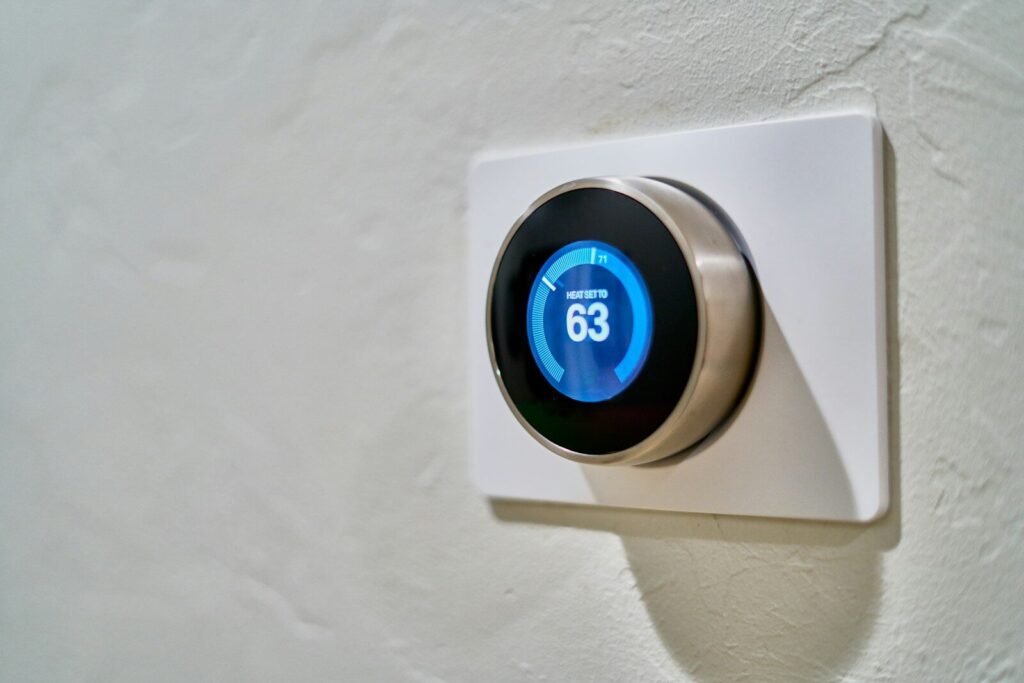
There is nothing more frustrating than coming home after a long day, expecting a perfectly pre-cooled living room, only to find your Nest Thermostat displaying that dreaded “Offline” icon. As someone who has managed smart home setups for over a decade, I’ve felt that specific sting of a “smart” device making life harder instead of easier. You check your router, you toggle your phone’s Wi-Fi, and yet the thermostat remains a stubborn, uncommunicative puck on the wall. This isn’t just a minor tech glitch; it’s a breakdown of the comfort your home is supposed to provide.
After troubleshooting hundreds of these units—from the original 2nd Gen Learning Thermostats to the sleek new 4th Gen models—I’ve learned that the “fix” is almost never as simple as re-entering a password. It usually involves a deeper understanding of how the Nest balances power and connectivity. Technical documentation confirms that if your battery voltage drops below the 3.6V threshold, the Nest will disable its Wi-Fi radio to conserve power. Furthermore, for stable connectivity, your signal strength should ideally be above 50 on the device’s internal scale (or better than -60 dBm). If you don’t address these underlying power delivery or signal interference issues, you’ll be back on this same ladder next week. This guide is built on those hard-learned lessons, designed to get you back online and ensure you stay there for good.
That spinning “Offline” icon in your Google Home app isn’t just a connectivity glitch — it’s often a symptom of deeper hardware and power dynamics most troubleshooting guides never mention.
When homeowners search for how to connect Nest thermostat to WiFi after a dropout, they typically assume a wrong password or a router hiccup is the culprit. In practice, the issue runs deeper. Nest thermostats draw power directly from your HVAC system’s wiring, and when that power delivery is inconsistent, the Wi-Fi radio is often the first thing the thermostat sacrifices to conserve energy. Your Nest going offline may have nothing to do with your network at all.
This is where Power Sharing becomes critical to understand. If your system lacks a dedicated C-wire (common wire), the thermostat steals small amounts of power from the heating and cooling wires during operation — a process that can leave the battery chronically undercharged. According to Google Support, Nest thermostats require a minimum battery voltage of 3.7V to successfully download and install software updates over Wi-Fi. Drop below that threshold, and disconnections become a frustrating routine.
Connectivity, in other words, is a hardware-software handshake — not just a password problem. The sections ahead break down the specific fixes for each Nest generation, because the solution for a 2020 Nest Thermostat looks quite different from what’s needed for a Nest Learning Thermostat.
Updating Wi-Fi Settings Across Different Nest Generations

Knowing which steps to follow for your specific Nest model is the difference between a two-minute fix and a frustrating loop of failed reconnection attempts.
The wrong approach here — triggering a full Nest thermostat factory reset — will wipe your heating and cooling schedules entirely, and it’s almost never necessary just to update a network.
Nest Thermostat (2020 model). This entry-level device handles network changes almost entirely through the Google Home app. Open the app, tap your thermostat, go to Settings → Wi-Fi → Change Network, then follow the on-screen prompts. No physical menu navigation required.
Nest Learning Thermostat (2nd/3rd Gen) and Nest Thermostat E. These models require you to work directly on the device ring. Press the ring to open the Quick View menu, scroll to Settings → Reset → Network, then navigate to Wi-Fi to select your new network. One critical caveat: both the Nest Thermostat E and 2nd generation Nest Learning Thermostat are strictly limited to 2.4 GHz Wi-Fi bands. If your router recently switched to a 5 GHz-only broadcast, that alone can explain a persistent offline status.
4th Gen Nest Learning Thermostat. Google’s newest generation supports both 2.4 GHz and 5 GHz bands and is configured primarily through the Google Home app, similar to the 2020 model — but with richer on-device display options for confirming connection status.
“Change Network” vs. “Reconnect.” These two options are not interchangeable. Reconnect attempts to re-establish a link to the network already stored in memory — useful after a router reboot. Change Network clears the saved credentials and prompts you to select and authenticate with a new one. Use Change Network any time your network name or password has been updated. The distinction matters more than most guides acknowledge, and choosing the wrong option can send you in circles before you ever touch a reset option — which is exactly where the next section picks up.
When to Use a Nest Thermostat Factory Reset
A factory reset is a last resort — not a first step — and knowing the difference can save you hours of unnecessary setup work.
Restart vs. Factory Reset: A restart simply reboots the thermostat’s software, like cycling power on a router. A factory reset wipes everything — schedules, preferences, Wi-Fi credentials, and account links — returning the device to its out-of-box state. As Google Support confirms, a factory reset removes all personal settings and requires you to re-add the device to the Google Home or Nest app from scratch. That means you’ll also need to know how to set up Google Nest wifi credentials again during the reconnection process.
When a reset is genuinely necessary: The clearest scenario is inheriting a thermostat from a previous homeowner. If the device is still linked to someone else’s account, no amount of Wi-Fi troubleshooting will resolve the connection problems — you need a clean slate. Persistent offline loops after correct credentials are entered are another legitimate trigger.
The real cost of resetting: Your heating and cooling schedules disappear entirely. If you’ve spent weeks fine-tuning a temperature routine, photograph every schedule screen before proceeding.
Pro Tip: Export or manually document your schedule settings before initiating any reset. Rebuilding them from memory is tedious and easy to get wrong.
Reset All Settings — step by step:
Press the thermostat ring to open the menu
Scroll to Settings, then select Reset
Choose All Settings to perform a full factory reset
Confirm the action when prompted
Wait for the device to restart, then re-add it in the Google Home app
With a clean device in hand, the next challenge is often getting the app itself to recognize it — which is where a different set of connection errors tends to appear.
Troubleshooting the ‘Can’t Connect to App’ Error
Your Nest thermostat can show a Wi-Fi signal and still be completely invisible in the app — and the fix is rarely obvious without knowing where to look.
The most common culprit isn’t your network; it’s a breakdown in the setup handshake itself. During Nest thermostat WiFi setup, the Nest app relies on Bluetooth to establish that first connection between your phone and the device — before Wi-Fi credentials are even exchanged. If your phone’s Bluetooth is off or the devices are too far apart, the app simply won’t detect the thermostat, regardless of signal strength.
Entry Key and QR code validity matter more than most people expect. The Entry Key — the 6-character code displayed on the thermostat screen — expires if the device times out or restarts mid-setup. If the app rejects it, navigate back to Settings > Reset > Schedule on the thermostat to regenerate a fresh code, then retry immediately. Similarly, worn or smudged QR codes on older units can fail to scan; the manual Entry Key is always the more reliable fallback.
Network mismatch during setup is another silent blocker. Your phone must be connected to the same 2.4GHz network you’re assigning to the thermostat — not your 5GHz band, not a guest network. According to Asurion, Nest devices are also incompatible with captive portal networks — the kind used in hotels and offices that require a browser login — which Google Support confirms makes those environments completely unsupported.
Account migration problems round out this category. If your thermostat was originally registered under a legacy Nest account that hasn’t been migrated to a Google account, the app will authenticate but show no devices. The fix is completing the Google account migration at home.google.com and then re-adding the thermostat under the new account structure. Once your account and network foundation are solid, the next layer to examine is your router’s behavior — which has its own set of quirks that can knock even a perfectly configured Nest offline.
Optimizing Your Router for Smart Home Stability
Your router settings are often the silent cause behind a Nest that keeps dropping — and a few targeted changes can stop the cycle for good.
Band steering is one of the most overlooked culprits. Modern routers automatically shuffle devices between 2.4GHz and 5GHz bands to balance traffic load. In practice, this means your Nest can be bumped off its preferred frequency without warning, forcing you to reconnect your Nest thermostat to Wi-Fi repeatedly with no obvious explanation. Disabling band steering — or splitting your 2.4GHz and 5GHz networks into separate SSIDs — gives the thermostat a stable, dedicated lane.
Signal strength matters more than most people realize. According to Google Support, a reading of 75 or higher is considered strong for Nest devices, while 36 or lower signals a weak connection that will cause intermittent drops. You can verify your exact reading under Settings → Technical Info → Network on the thermostat itself. In larger homes, the 2.4GHz band is almost always the better choice — its longer wavelength penetrates walls and floors more effectively than 5GHz, which trades range for raw speed.
Assigning a static IP address removes another common failure point. When a DHCP lease expires, some routers assign a new IP to the thermostat, briefly breaking the connection. Setting a reserved IP in your router’s DHCP settings ensures the thermostat always gets the same address — no lease renewal, no drop.
|
Metric |
Good Range |
Action Needed |
|---|---|---|
|
Signal Strength |
75 or above |
Reposition router or add a Wi-Fi extender |
|
Frequency Band |
2.4GHz |
Disable band steering or create separate SSIDs |
|
IP Assignment |
Static/Reserved |
Set a DHCP reservation in router admin panel |
Getting these settings right addresses the infrastructure layer — but there’s still a practical checklist worth running through before you call any connection issue resolved.
The Bottom Line: Quick Connectivity Checklist
Most Nest connectivity problems trace back to just a handful of root causes — and checking them in order takes less than ten minutes.
Before running through anything else, confirm your battery voltage is above 3.7V. According to Google Support, when internal battery charge drops below 3.6V, the thermostat automatically disables Wi-Fi to conserve power — meaning the problem isn’t your network at all. That single check eliminates a surprisingly large number of “mysterious” disconnections.
Here are the five areas worth reviewing before assuming a deeper issue:
Battery voltage: Confirm it reads above 3.7V in the device settings before any other troubleshooting step.
Wi-Fi frequency: Older Nest models only see 2.4GHz networks — if your router broadcasts both bands under one name, the thermostat may be attempting to connect to 5GHz and failing silently.
App alignment: If you simply need to change the Wi-Fi network on your Google Nest, use the Google Home app for newer models; legacy units still rely on the Nest app. Using the wrong app causes setup steps to disappear or error out.
Signal strength: Navigate to Settings > Technical Info and aim for a reading above 75. Anything lower warrants a closer look at router placement or a Wi-Fi extender.
Network type: Captive portals and enterprise-grade security protocols without a standard WPA2 password will block your thermostat entirely, regardless of signal strength, as Asurion’s troubleshooting guide confirms.
A stable connection isn’t just a convenience — it’s what unlocks every energy-saving feature your thermostat was designed to deliver. Once these fundamentals are locked in, the focus shifts from fixing problems to keeping your entire smart home network ahead of them — which is exactly where the next section picks up.
Future-Proofing Your Hyvoxa Smart Home Experience

A Nest thermostat can only deliver on its promise of energy savings when the network beneath it is rock-solid. Every scheduling optimization, every remote adjustment, every efficiency gain depends on a stable Wi-Fi connection — drop that link, and even the smartest thermostat reverts to an expensive paperweight.
A smart home is only as reliable as the network it sits on — and that reliability isn’t a one-time setup task. It’s an ongoing commitment. Router firmware updates, ISP infrastructure changes, and new smart devices added to your network can all quietly shift the conditions your Nest depends on. A pattern worth building into your routine: check for router firmware updates monthly, verify your Nest’s software version after any router change, and revisit your band and channel settings whenever you add new connected devices.
Navigating these moving parts across multiple devices and platforms is exactly where complexity compounds. Hyvoxa exists to help homeowners cut through that complexity — whether you’re troubleshooting a persistent disconnect, integrating your thermostat with a broader automation setup, or building a network architecture that scales as your smart home grows. The Home Assistant community documents just how layered these issues can become, which underscores the value of having a knowledgeable resource in your corner.
Your thermostat is smart. Make sure your network is too — explore Hyvoxa’s smart home guides to build a connected ecosystem that stays connected.
Final Thoughts: Stability Over Convenience
Building a truly reliable smart home isn’t about buying the most expensive gear; it’s about understanding the invisible infrastructure that keeps it running. In my years of consulting on home automation, the most “stable” homes I’ve seen aren’t the ones with the newest routers, but the ones where the owners took ten minutes to set a static IP and verify their C-wire connection. I’ve seen many homeowners give up on Nest entirely because of these drops, only to realize later that a simple 2.4GHz band split was all they needed to solve months of headaches.
Treat your Nest as more than just a Wi-Fi client; treat it as a precision instrument that needs a steady diet of power and a clear, uncrowded signal. If you’ve followed the steps in this guide—especially the battery voltage check and the router optimization—you’re now ahead of 90% of users. You can finally stop checking the app every hour and trust that your home will be exactly the temperature you want it to be. If you’re still hitting walls, don’t hesitate to consult a Pro-installer, but with the data you have now, you’re likely more equipped than the average tech support agent.
Sources & Technical References
Google Nest Help: Troubleshooting Wi-Fi Connectivity Nest Thermostat Technical Specifications Google Nest Support: Change Nest Thermostat Wi-Fi Network
Frequently Asked Questions
How do I reconnect my Nest thermostat to Wi-Fi?
To reconnect, go to Settings > Network on your thermostat ring. Select your Wi-Fi network name and enter your password. If using the 2020 model, use the Google Home app under Device Information > Wi-Fi.
Why can’t I connect my Nest thermostat?
The most common reasons include a battery voltage below 3.6V, interference on the 2.4GHz band, or an incompatible ‘captive portal’ network (common in hotels).
How do I reset my Google Nest to a new Wi-Fi?
Navigate to Settings > Reset > Network. This clears the old credentials without wiping your temperature schedules, allowing you to select a new network.