
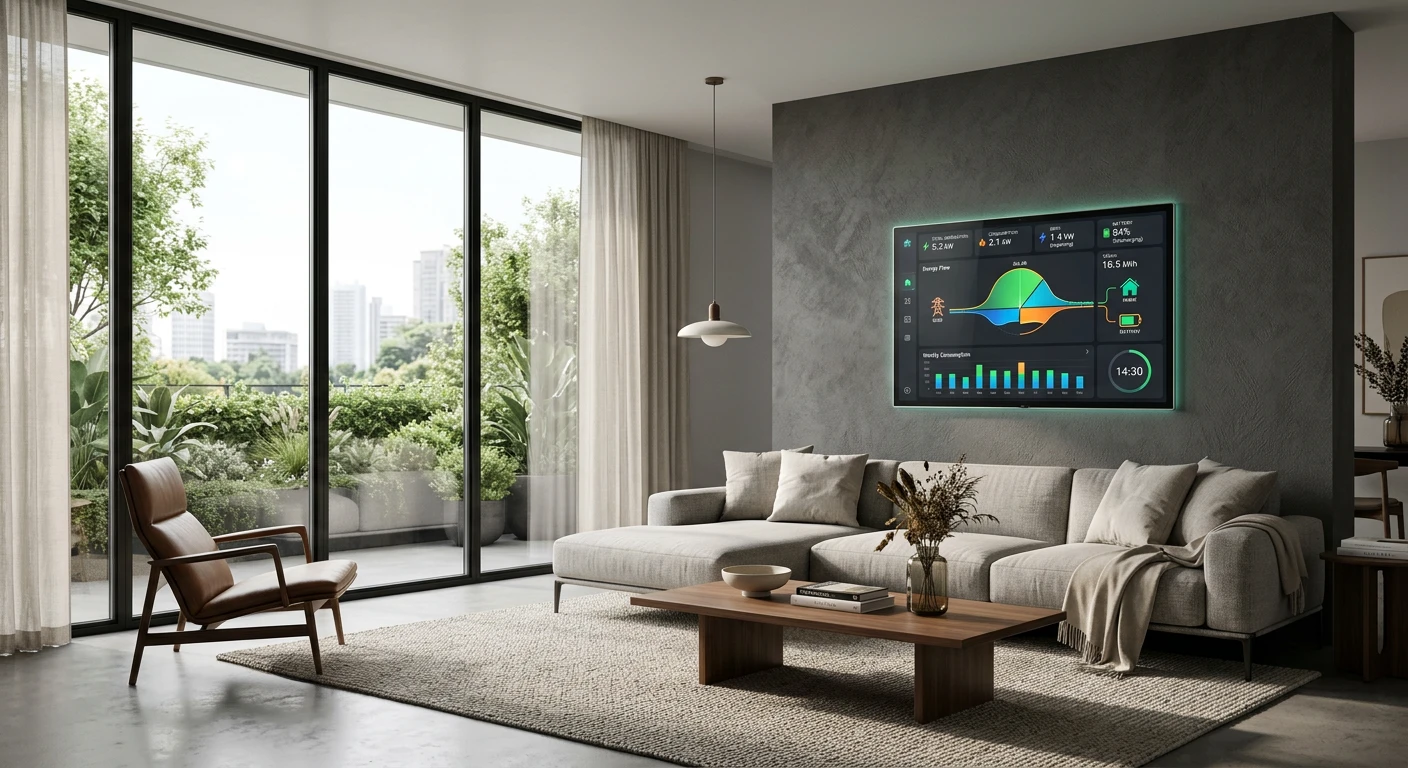
The Integration Gap in Modern Energy Management
I remember the frustration of standing in my kitchen, staring at a $350 utility bill, while surrounded by $1,000 worth of "smart" tech. I had the bulbs, the fancy Wi-Fi plugs, and a high-end thermostat, yet my energy consumption hadn’t budged an inch. It felt like I’d been sold a bill of goods—a collection of expensive toys that looked cool in an app but did absolutely nothing to optimize my home’s actual performance. That’s the "smart home tax": the gap between owning connected devices and actually implementing smart home energy management systems that work.
In my decade of hands-on experience building and troubleshooting residential systems, I’ve found that most people fail for the same reason I did: they buy gadgets, not a strategy. We’ve been conditioned to think that adding "smart" to a product’s name automatically makes it efficient. It doesn’t. Real savings only happen when you move past the individual device and start thinking about orchestration through a reliable smart home platform. This guide is the result of years of testing what actually works—and what’s just expensive digital clutter.
Most smart homes aren’t actually smart — they’re just connected, and that distinction is costing homeowners real money every month.
You’ve got a smart thermostat, maybe some Wi-Fi-enabled plugs, possibly a few automated lights. Each device does its job. But without a unified smart home energy management strategy tying them together, you’re left with a collection of gadgets that don’t communicate, don’t coordinate, and certainly don’t optimize. That’s the fragmentation trap — and it’s the silent reason your energy bills aren’t dropping the way you expected.
The difference between a smart device and a Smart Home Energy Management System (SHEMS) is the difference between having individual musicians and having an orchestra. A single smart plug monitors one outlet. A SHEMS monitors your entire home’s consumption, identifies waste patterns, and triggers automatic responses across every connected device simultaneously. According to Parks Associates, 70% of U.S. households with smart energy devices report saving money through reduced energy consumption — but that figure climbs significantly when devices operate as a coordinated system rather than isolated tools.
The reason automation consistently beats manual adjustment comes down to consistency. Humans forget to turn things off, misjudge peak rate hours, and rarely review usage data. Automated systems don’t. A central platform bridges the gap between your individual devices, turning passive hardware into an active, responsive energy strategy — which is exactly why the foundation you build on matters more than any single device you buy.
Why a Centralized Smart Home Hub is Non-Negotiable
A smart home hub isn’t just a convenience layer — it’s the operational brain that transforms isolated devices into a coordinated energy-saving system.
Without a centralized platform, your smart devices operate on fixed schedules that ignore real-world conditions. A hub changes that by continuously collecting data — occupancy patterns, energy draw, time-of-use rates — and using that information to make decisions no single device can make alone. According to research from ENERGY STAR and NYSERDA, integrated systems use geofencing and occupancy sensors to control thermostats, lighting, and smart plugs simultaneously, not sequentially. That coordination is where real savings emerge.
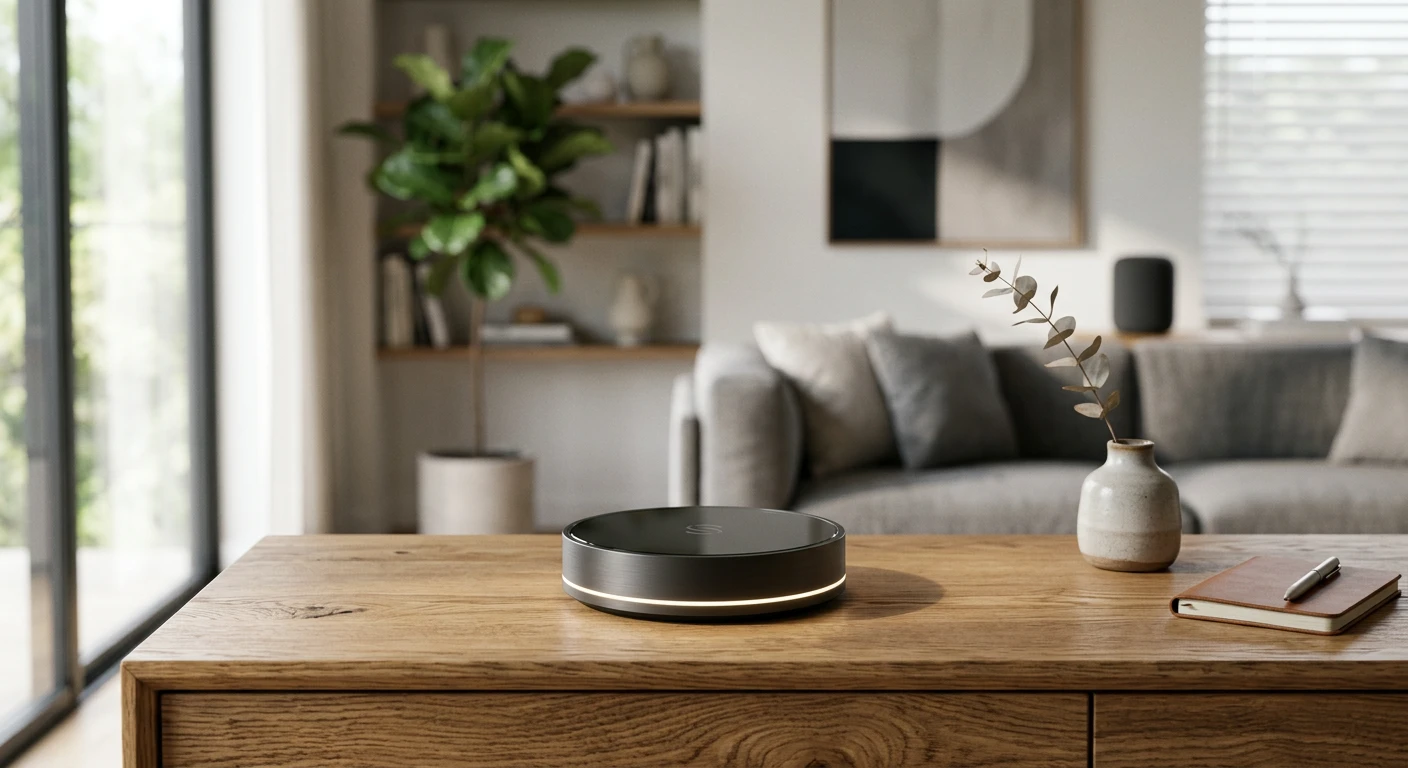
Three core functions a hub performs that standalone devices cannot:
- Conditional rule automation — "If the last person leaves home, cut power to non-essential circuits and drop the thermostat setpoint."
- Energy drain monitoring — Smart circuit monitoring flags appliances quietly consuming standby power around the clock, often the biggest hidden cost in a connected home.
- Cross-device arbitration — When a window sensor, occupancy detector, and weather feed all send conflicting signals, the hub resolves priority. A single smart device has no mechanism to do that.
A platform-first approach protects your hardware investment. When you build around a capable ecosystem rather than individual products, individual devices become replaceable components. Hardware evolves; a solid platform absorbs that change without forcing you to start over.
That coordination becomes most visible — and most measurable — when you look at climate control specifically, which remains the single largest driver of residential energy costs.
The Math of Smart Thermostat Energy Savings
The smart thermostat is one of the highest-impact devices in any home energy system — and the numbers prove it.
According to ENERGY STAR, smart thermostats can save homeowners 8% on heating costs and 10% on cooling costs annually. On a $2,400 annual energy bill, that’s roughly $200 back in your pocket from one device. But that figure assumes the thermostat is doing more than just following a schedule — and that distinction matters enormously.
Manual vs. programmable vs. smart thermostats represent three fundamentally different levels of control. Manual thermostats react only when you touch them. Programmable thermostats follow a fixed schedule — better, but rigid. Smart thermostats learn your household patterns, detect when routines shift, and adjust proactively. That "learned behavior" capability is what separates a convenience gadget from a genuine money-saving tool.
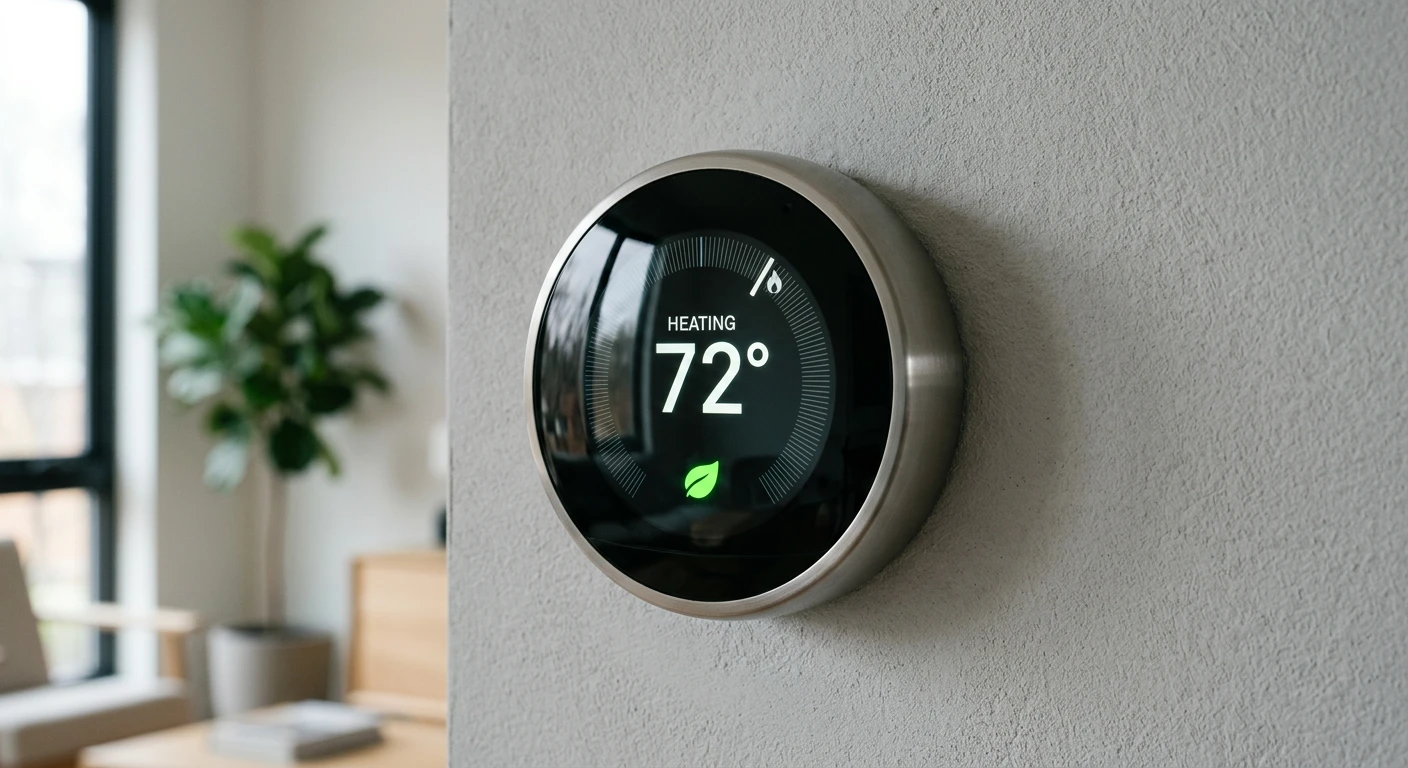
In practice, a smart thermostat connected to a broader smart home platform does something neither of its predecessors can: it responds to other data points in real time. When an occupancy sensor detects an empty house or a window sensor registers an open pane, the thermostat adjusts immediately — no wasted heating or cooling. That cross-device communication is only possible through a centralized hub, exactly the kind of coordination covered in the previous section.
Manual thermostats, by contrast, often contribute to inflated electric bills. They heat or cool on assumption, not reality. And assumption is expensive. The financial case for upgrading is clear — and the impact of smarter energy management extends well beyond your monthly bill.
Beyond the Bill: The Environmental ROI of SHEMS
Smart home energy management systems don’t just shrink your monthly utility bill — they represent one of the most scalable levers available for reducing residential carbon emissions nationwide.
The personal gains from smart thermostat energy savings are tangible and measurable, but they’re also part of a much larger equation. According to the Consumer Technology Association, smart home technology has the potential to reduce total residential primary energy consumption by up to 10% and avoid an extraordinary 100 million tons of CO2 emissions.
"Avoiding 100 million tons of CO2 through residential smart technology isn’t a distant forecast — it’s an achievable outcome if adoption continues on its current trajectory."
Vampire loads — the silent energy drain from devices left in standby mode — account for roughly 5–10% of a typical home’s electricity use. Smart circuit controls and automated lighting schedules directly target this waste, cutting consumption without requiring any behavioral change from the homeowner.
The grid-level impact amplifies individual action. When millions of homes shift energy-intensive tasks to off-peak hours through automated scheduling, demand spikes flatten, utilities burn less fossil fuel, and carbon output drops system-wide.
Connecting personal savings to planetary impact reframes the entire decision. A smarter home isn’t just a financial upgrade — it’s a tangible contribution to carbon neutrality goals. Of course, realizing that potential requires clearing a few common hurdles first.
Overcoming the Barriers to Total Home Optimization
Most homeowners assume that building a smart home energy management system requires technical expertise, a large budget, or a complete home renovation — none of that is true.
The complexity barrier is often overstated. Modern platforms have simplified setup to the point where a hub and a smart thermostat can be running within an hour. The real friction isn’t technical; it’s not knowing where to start. In practice, the smartest entry point is exactly what it sounds like: begin with the "brain" (a compatible hub) and the highest-impact device (your thermostat). Those two components alone can deliver measurable savings before you add a single other device.
Interoperability is the hidden factor that determines whether your system grows smoothly or stalls out. Choosing devices that support open standards like Matter or Zigbee means every new addition — lighting, circuit controls, EV chargers — communicates with the hub natively. Without this foundation, you end up with isolated devices that can’t be orchestrated, which is precisely the fragmentation problem covered in earlier sections.
Real-time energy monitoring solves the final barrier: the unknown. A pilot study of 50 homes found that integrated systems achieved significant reductions in both annual energy use and peak demand, according to ENERGY STAR. That outcome depends on visibility — monitoring surfaces the "energy drainer" appliances that schedules and automation can then target directly. Without real-time data, you’re optimizing blind.
Once these three barriers are addressed, the path to a fully optimized home becomes far more straightforward than most people expect — and the financial case becomes equally clear.
The Bottom Line: Key Takeaways for Smart Energy Management
A connected system of smart devices doesn’t just add savings — it multiplies them. That’s the central insight this article has built toward, and it’s worth making concrete before moving on. According to ENERGY STAR, a fully integrated smart home energy management system can reduce annual household energy use by an average of 16% — a figure that isolated gadgets simply can’t match on their own.
With that benchmark in mind, here’s what actionable smart energy management actually looks like:
- Integration is the multiplier. A SHEMS creates compounding efficiency gains by allowing devices to coordinate — something no single thermostat or smart bulb can do alone.
- Start with the "Brain." Prioritize a central hub or platform that supports multi-device orchestration before adding individual products. The platform shapes what’s possible.
- Automate the Big Three. Thermostats, lighting, and circuit controls deliver the fastest return on investment and form the practical core of any working system.
- Monitor in real-time. Energy monitors reveal which appliances are quietly draining power, allowing you to schedule high-consumption tasks during off-peak rate windows.
Together, these four moves shift your smart home from a collection of convenient gadgets into a system that actively works for your wallet. The question isn’t whether the technology can deliver — it’s whether your setup is structured to let it. That’s exactly where a unified platform makes all the difference.
Future-Proofing Your Home with Hyvoxa
The gap between owning smart devices and running a smart home is the integration gap Hyvoxa aims to close. Most homeowners stall at the gadget stage — a thermostat here, a smart plug there — without ever assembling those pieces into a system that actively works for them. That’s where real savings get left on the table.
The Consumer Technology Association suggests that widespread adoption of home automation products has the collective potential to significantly lower the carbon footprint of the residential sector. But that potential only materializes when devices communicate, coordinate, and respond as a unit — not as isolated hardware scattered across an app drawer.
Hyvoxa simplifies that transition by bringing monitoring, scheduling, and control into a single unified interface. Instead of juggling multiple apps and manually cross-referencing energy data, you get one clear view of your home’s consumption — and the automation logic to act on it. In practice, that means fewer energy spikes, smarter responses to utility rate changes, and a system that compounds its own efficiency over time.
The takeaway is straightforward: stop buying gadgets, start building a system. Every device you already own becomes more valuable the moment it’s connected to a platform that understands the full picture. If you’re ready to move from fragmented savings to real, measurable results, explore the Hyvoxa platform and see what integrated energy management actually looks like in action.
Realizing the Full Potential of Your Investment
After years of auditing home energy setups and testing nearly every ecosystem on the market, the conclusion is always the same: efficiency is a team sport. You can have the best hardware in the world, but if it isn’t talking to your window sensors or your occupancy trackers, you’re only getting a fraction of the smart thermostat energy savings you paid for. The "set it and forget it" promise of smart technology only comes true when you have a central home smart hub doing the heavy lifting for you. It’s the difference between a house that’s merely connected and one that is truly intelligent.
My advice to anyone starting this journey is to stop chasing the newest, shiniest gadget. Instead, focus on the foundation of your smart home energy management strategy. Prioritize interoperability and choose a platform that allows your devices to share data across brands. When you bridge the integration gap, you aren’t just saving a few dollars on your monthly bill—you’re building a more sustainable, responsive, and future-proof home. The technology is finally here to make these savings effortless; you just need to give your devices a reason to work together.