
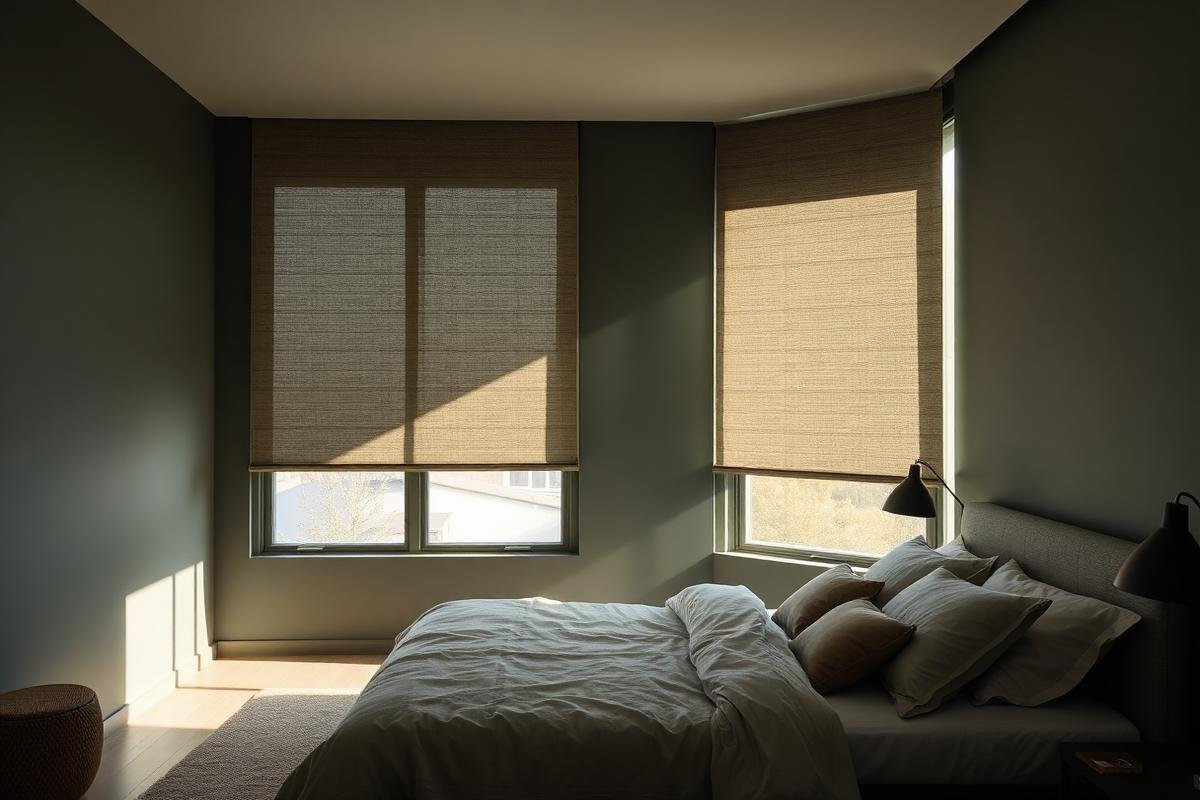
Motorised shading is often the first automation clients fall in love with, because the benefit is visible on day one. Specifying it well comes down to three decisions.
Decision one: power
Rechargeable lithium motors are ideal for retrofit — no cabling, no plaster damage, and nine to eighteen months between charges depending on cycle count. Hardwired motors are preferable in new build, for high-cycle windows, for very large or heavy shades, and anywhere a ladder charge would be a nuisance.
Decision two: fabric openness
- 1% or blackout — bedrooms, media rooms, nurseries. Pair with side channels to kill light leak at the edges.
- 3% — living rooms facing strong sun where you want glare control but keep a soft view out.
- 5% — studies and kitchens. Comfortable screen work with the outside world still legible.
- 10% — north-facing or shaded apertures where privacy matters more than heat.
- Sheer or dual-roller — halls and dining rooms that need both a daytime and a nighttime state.
Decision three: the rules
Hardware is only half the value. The automation makes it worthwhile: sun-position tracking by façade, a wake sequence that opens bedroom shades gradually at your alarm time, a privacy rule at dusk, and a holiday pattern that varies slightly so the house never looks unoccupied.
The detail nobody mentions
Synchronise travel across shades on the same elevation. When four blinds start, move and stop together, the installation reads as architecture. When they stagger, it reads as gadgets. It costs nothing to program and it is the difference clients notice most.
Shading is the only automation that saves energy while you sleep and protects your interiors while you are out.
Measure twice, sample fabrics in your own light, and never choose openness factor from a website swatch. Daylight at your window is the only accurate test.