
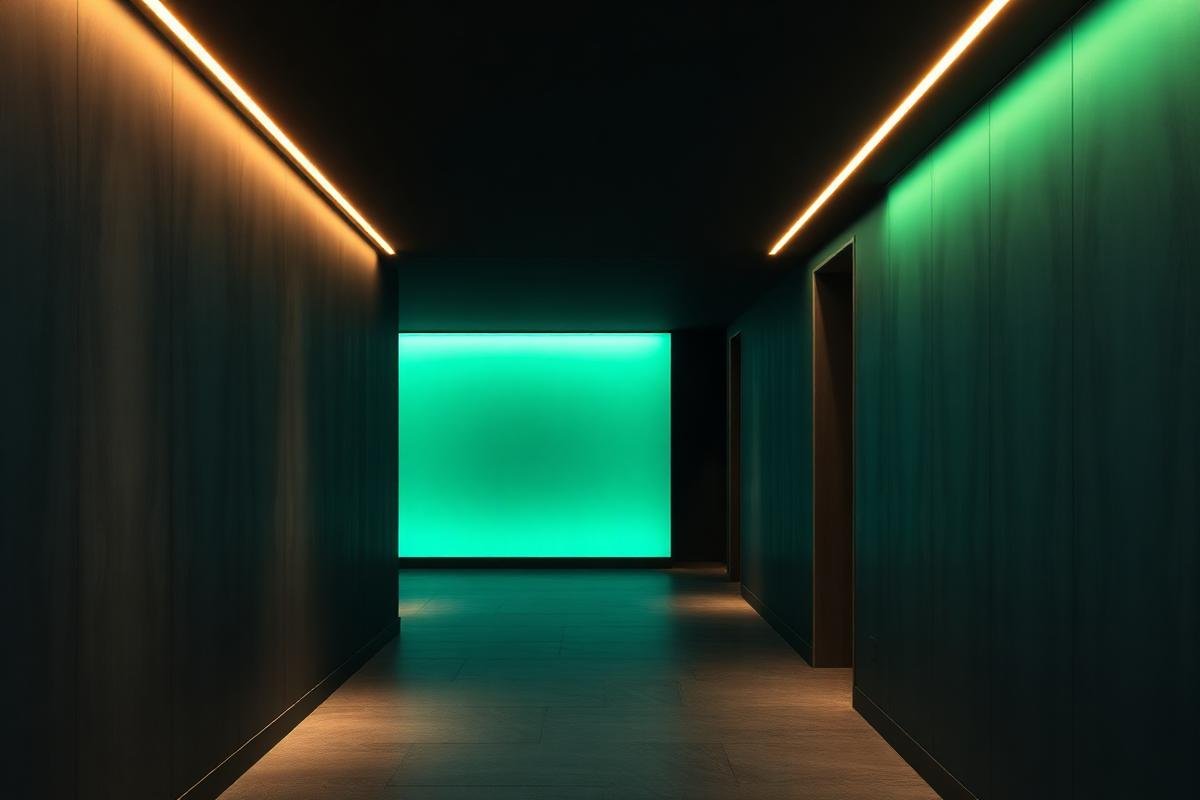
Your body reads light as a clock. Specialised cells in the retina, sensitive mainly to blue wavelengths, tell the brain whether it is day or night — and modern homes send that clock the wrong signal almost every evening.
Why 2700K at 11pm is a problem
It is not only colour temperature that matters, but intensity and timing together. Bright, cool light after sunset suppresses melatonin release, delaying sleep onset by up to ninety minutes. The same light at 7am does the opposite: it anchors your rhythm and improves daytime alertness.
A schedule that works
- 06:30–09:00 — 4000K at 80% in kitchens and bathrooms. Bright, crisp, wake-promoting.
- 09:00–16:00 — 3500K, dimmed to whatever daylight leaves unfinished. Let the sun do the work.
- 16:00–19:00 — 3000K at 60%. The visual signal that the working part of the day is over.
- 19:00–21:30 — 2400K at 35%. Warm, low and directed downward rather than overhead.
- 21:30 onward — 2200K at 12%, with floor-level pathway lighting only for night movement.
The details that separate good from excellent
Beam direction beats brightness
Light entering the eye from above the horizontal is far more alerting than the same intensity reflected off a floor or wall. In the evening, lower the source, not just the level.
Colour rendering matters for mood
Specify fixtures at CRI 95 or above. Skin looks healthy, food looks appetising, and rooms feel warmer at lower intensity, which lets you dim further without the space feeling gloomy.
Automate it, or you will not do it
Nobody manually adjusts colour temperature five times a day. This only works when the schedule runs itself and drifts with the seasons at your latitude.
The best lighting system is the one you never think about, in a house that always looks right.
If you are building or renovating, put tunable white in bedrooms, kitchens and any room used both morning and night. Everywhere else, warm dim is enough. It is a small specification decision at the drawing stage and an expensive one to add later.