
The Engineering Behind the DEEBOT Ecosystem
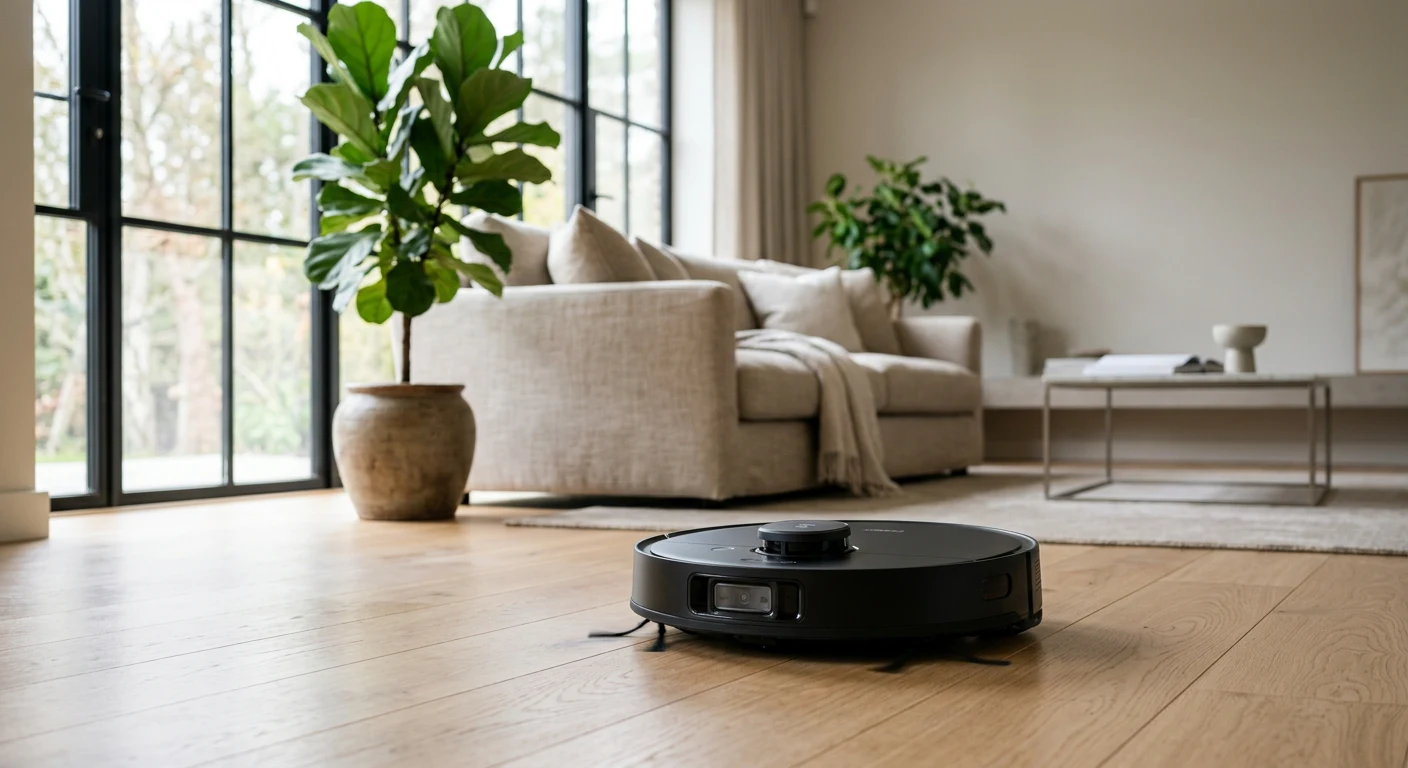
ECOVACS DEEBOT has spent a decade quietly becoming the world's most trusted floor care brand — and the engineering behind that reputation tells you exactly why.
According to ECOVACS, the brand has held the top market share for robotic vacuums in China for ten consecutive years, from 2015 through 2023, while expanding to nearly 180 major markets and serving more than 38 million households globally. That scale isn't marketing — it's a feedback loop. More real-world homes mean more edge cases solved, more firmware refinements shipped, and a smarter product with every generation.
The technical leap that changed everything was the move from basic bump-and-spin sensors to full LiDAR navigation. Early robot vacuums operated on reactive logic — they hit a chair leg, they turned. A modern lidar navigation robot vacuum builds a precise, room-scale map before the first wheel turns, plotting efficient cleaning paths the way a GPS plots a route. The result is systematic coverage instead of random wandering.
That mapping capability has since evolved into true 3D spatial awareness, which many industry observers now consider the gold standard for autonomous floor care. Rather than treating a room as a flat grid, 3D mapping accounts for furniture legs, raised thresholds, and low-clearance obstacles — the kinds of real-home variables that expose the limits of simpler systems.
For pet owners specifically, that precision matters in ways that go well beyond navigation — which is exactly where the next layer of DEEBOT's engineering story begins.
Is DEEBOT a Good Robot Vacuum for Pet Owners?
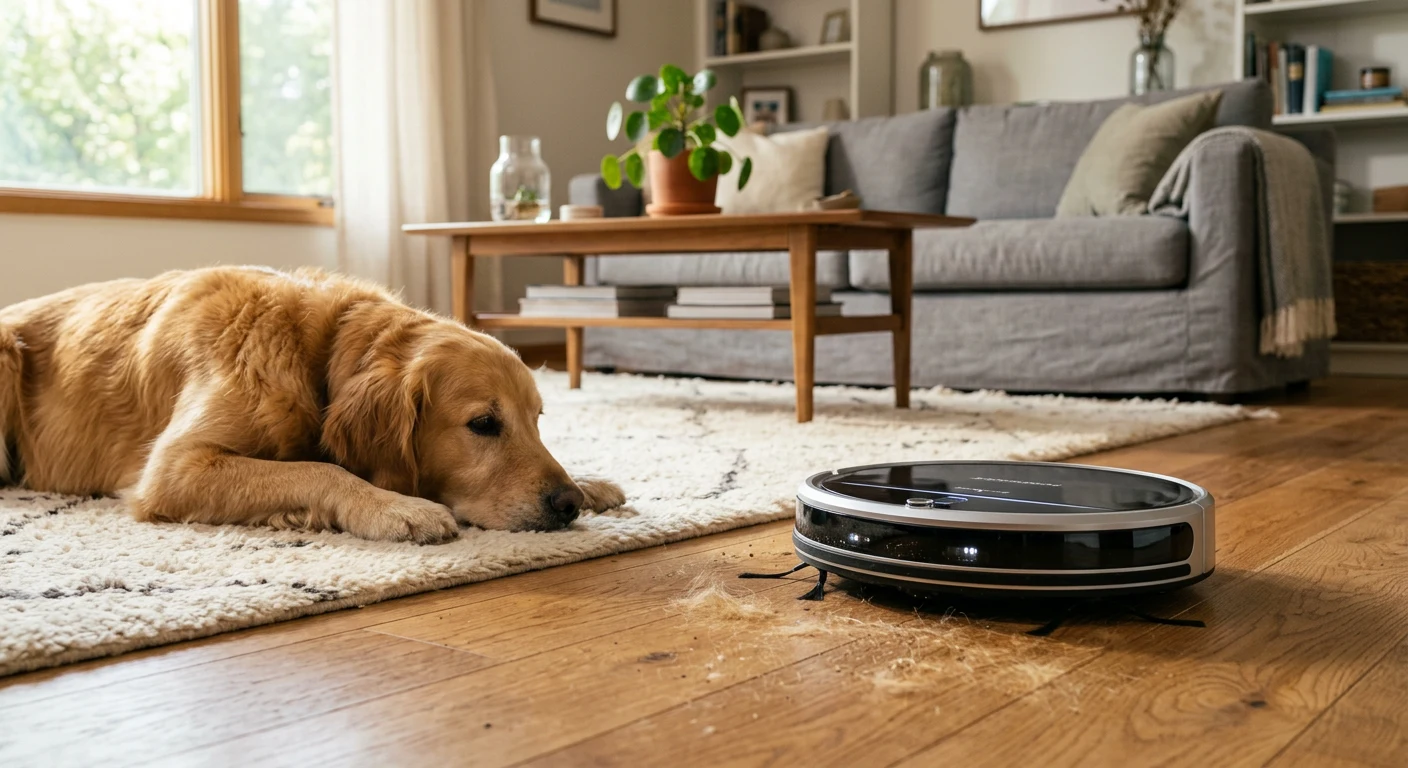
The ECOVACS DEEBOT robot vacuum has quietly become one of the most capable tools for households where fur, muddy paw prints, and dried-on messes are daily realities. Pet owners face a unique cleaning challenge — one that demands both serious suction and smart mopping in equal measure.
Suction vs. fur tangles is the tension most robot vacuums never fully resolve. In practice, high-power models tend to wrap long pet hair around the brush roll, defeating the purpose. DEEBOT addresses this with anti-tangle roller brush engineering designed to pull hair into the dustbin rather than coiling it around the mechanism — a meaningful difference in multi-pet households where daily maintenance shouldn't mean manual detangling.
The mopping side is where DEEBOT's engineering genuinely separates itself. The DEEBOT X8 Pro Omni features FocusJet technology using 5,000 Pa high-pressure water jets to pre-dissolve dried-on stains before the mop pad ever makes contact. That matters enormously for pet owners dealing with tracked-in mud or dried food residue. As PCMag notes, the Ecovacs DEEBOT X8 Pro Omni "impresses on all fronts with an effective roller mop, top-notch vacuum performance, and hands-off self-maintenance."
Self-cleaning roller mops compound this advantage in homes with multiple pets. Rather than spreading bacteria-laden residue across floors, the system washes and dries the mop automatically — keeping each cleaning pass genuinely sanitary. That hands-off maintenance loop is where DEEBOT earns its place as a true household workhorse, not just a novelty gadget.
The next logical question for pet owners is how all this performance holds up in a quieter, less disruptive package — which is exactly where the T50 Max Pro's engineering becomes worth examining closely.
Quiet Power: The T50 Max Pro Advantage
The DEEBOT T50 Max Pro Omni delivers serious cleaning performance without the jarring noise that typically defines high-suction robot vacuums — and that distinction matters more than most spec sheets suggest.
According to TechRadar, the T50 Max Pro Omni operates at just 61dB on its highest suction setting, while comparable high-performance alternatives can register up to 77dB during intensive cleaning cycles. That 16dB gap isn't a minor footnote — it's roughly the difference between a quiet conversation and a running dishwasher.
The psychological benefit here is real. A vacuum that hums along at 61dB becomes background noise. It runs while you're on a video call, while a baby naps, or while you're watching TV — and you barely register it. At 77dB, that same cleaning cycle demands your attention in a way that interrupts rather than assists your day. True "set and forget" automation only works when the device disappears into the background.
For pet owners searching for the best DEEBOT vacuum for pet hair, noise levels carry an extra layer of importance. Many animals experience genuine stress around loud appliances — skittish cats, anxious dogs, and rescue pets with sensitivities can react poorly to the sharp roar of a high-suction cycle. The T50 Max Pro Omni's quieter operation makes it far more practical for households where floor care and pet welfare have to coexist.
The engineering trade-off that most manufacturers accept is straightforward: more suction typically means more motor noise. ECOVACS has invested in motor isolation and acoustic dampening to break that assumption. The result is a machine that doesn't force you to choose between clean floors and a calm household.
That same precision engineering extends well beyond acoustics — which is why understanding how the T50 Max Pro Omni actually sees your home becomes the next critical piece of the picture.
Navigating the LiDAR and 3D Mapping Landscape
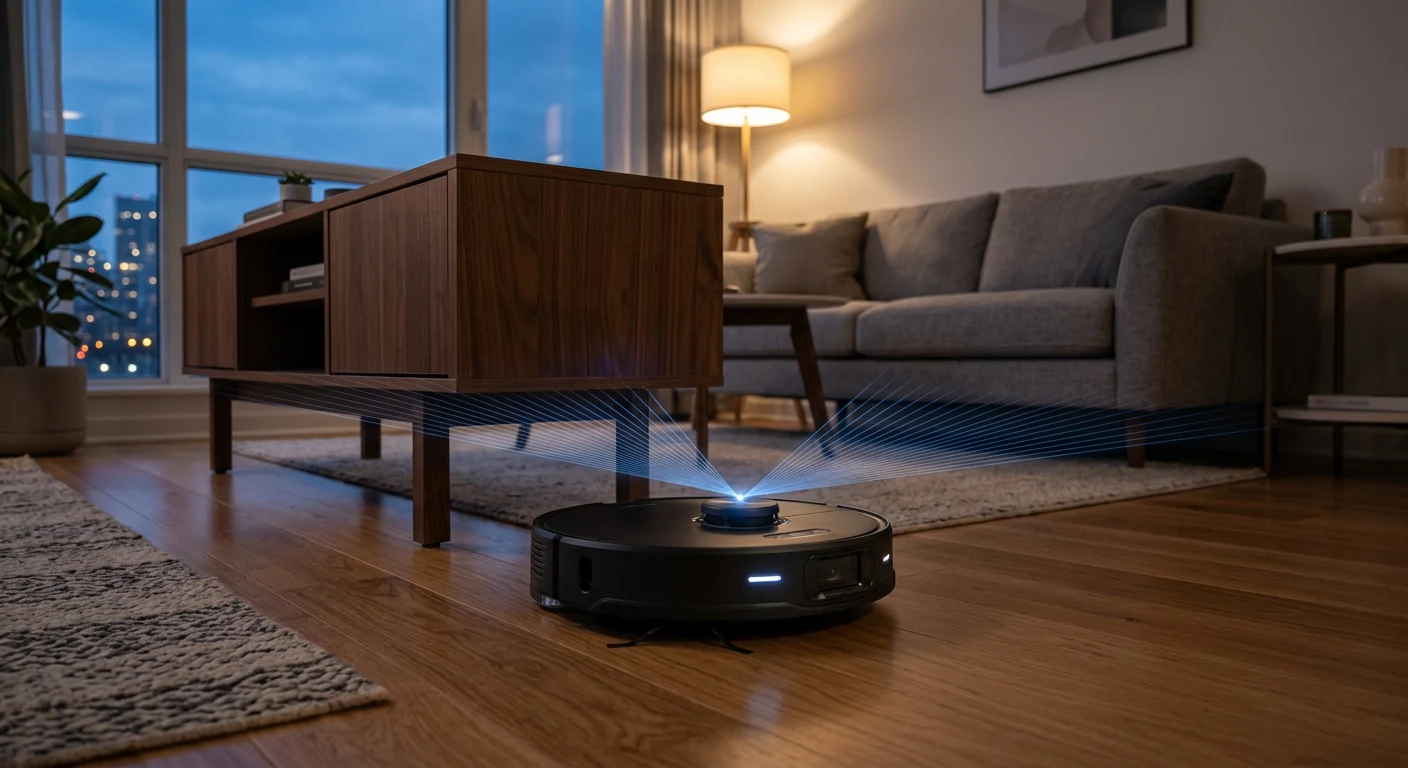
LiDAR-powered navigation transforms a robot vacuum from a random bouncing disc into a precise, methodical cleaning machine — and DEEBOT's implementation of this technology is where the platform genuinely separates itself.
Precision Laser Mapping works by emitting thousands of laser pulses per second, measuring the time each pulse takes to return. The result is a millimetric-accurate floor plan built in real time — not an approximation, but a reliable spatial blueprint the vacuum references on every single run. According to Ecovacs, DEEBOT models utilize Precision Laser Mapping and 3D Maps to navigate complex environments without getting stuck, which matters enormously in homes with intricate layouts of luxury vinyl plank or hardwood flooring where surface transitions can confuse lesser sensors.
One of the most common frustrations with older robot vacuums — getting wedged under low-profile furniture or lost in tight corridors — is largely resolved here. The 3D mapping layer adds vertical awareness, letting the DEEBOT assess clearance heights before committing to a path. In practice, this means fewer rescue missions and more completed cleaning cycles.
That same 3D map populates directly inside the ECOVACS HOME app, giving you a visual overview of your home's zones, no-go boundaries, and cleaning history. You can assign specific rooms, set virtual barriers around furniture legs, or schedule targeted cleans for high-traffic areas — all from your phone.
A well-maintained map also keeps the vacuum running efficiently, which quietly connects to runtime health. When navigation is optimized, the battery works smarter — something worth keeping in mind as we explore what happens when owners start asking why is my DEEBOT not charging and what role software and hardware maintenance play in keeping performance consistent.
Solving the Charging and Battery Longevity Puzzle
Battery anxiety is one of the most common frustrations with robot vacuums — but understanding how long the DEEBOT battery lasts, and why, removes most of that stress entirely.
In practice, the T50 Max Pro Omni consistently delivers battery life that exceeds two hours of active cleaning. PCMag expert testers highlighted this 120-plus-minute runtime as a primary driver of high satisfaction scores — a meaningful edge when you're covering larger floor plans without interruption.
Charging failures are almost always traceable to one of two culprits: dirty contact points or a firmware sync issue. Neither requires a service call.
Common troubleshooting steps when your DEEBOT won't charge properly:
- Wipe the charging contacts on both the dock and the robot with a dry microfiber cloth — oxidation buildup is the number-one cause of intermittent charging
- Reboot the robot by holding the power button for 10 seconds to clear any firmware state that's blocking the charging handshake
- Reposition the dock on a flat, hard surface away from direct sunlight, which can confuse the infrared docking sensors
- Check the ECOVACS HOME app for firmware updates, since charging logic improvements are frequently pushed via OTA releases
Lithium-ion cell longevity depends heavily on storage habits. Avoid leaving the battery fully depleted for extended periods — the dock's trickle-charge mode is specifically designed to hold cells at an optimal charge level between cleaning cycles. If you're storing the unit for more than two weeks, a 50–60% charge state is healthier than full.
The Return to Base firmware logic deserves credit here too. Rather than running until the battery dies mid-floor, DEEBOT calculates remaining charge against the cleaning area in real time. When the battery drops to a threshold level, it routes back to dock, recharges, and resumes exactly where it left off — preserving both cell health and cleaning continuity. That kind of intelligent battery management is part of what makes the DEEBOT a genuinely hands-off tool, a point worth keeping in mind as we look at the full picture of what separates this machine from the field.
What You Need to Know: The DEEBOT Bottom Line
If you've been asking is DEEBOT a good robot vacuum, the answer is grounded in a decade of measurable innovation — not marketing copy.
DEEBOT's case for the smart home comes down to five compounding strengths that few alternatives can match simultaneously.
- Navigation heritage. Ten-plus years of LiDAR refinement means the mapping logic behind a DEEBOT is genuinely mature. For multi-room homes where a robot needs to distinguish a kitchen island from a pet bed, that experience gap is real.
- Cleaning power. The FocusJet 46,000 Pa suction system concentrates force on stubborn, dried-on debris — a meaningful step beyond standard roller-brush extraction.
- Hands-off reliability. LiDAR navigation isn't just a spec-sheet feature; in practice, it eliminates the repeated rescues and missed zones that plague sensor-only models.
- Runtime. Battery life consistently clearing 120 minutes means large open floor plans — typically 1,500–2,000 sq ft — finish in a single pass without mid-cycle docking.
- Noise floor. At 61dB, DEEBOT operates well below the 77dB ceiling common among competing units, making daytime or overnight runs genuinely unobtrusive.
On balance, no single feature wins the argument — the value proposition is how these strengths stack. Quiet operation matters less if navigation is unreliable. Suction power matters less if the battery quits early. DEEBOT's durability as a platform comes from these elements reinforcing each other. That interdependence is exactly what the next section explores when matching specific models to your home's actual layout and maintenance demands.
Choosing Your DEEBOT: 2026 Buyer Guidance
The right DEEBOT model comes down to three factors: home size, maintenance tolerance, and how much automation you actually want. Getting that match right is what separates a robot vacuum that earns its counter space from one that collects dust in a closet.
T-series vs. X-series is the first decision point. The T-series handles apartments and mid-size homes efficiently, offering strong suction and reliable mapping at a more accessible price. The X-series — including the DEEBOT X8 Pro Omni, noted for its effective roller mop by PCMag for its effective roller mop — is built for larger, multi-surface homes where vacuuming and mopping need to happen simultaneously without compromise.
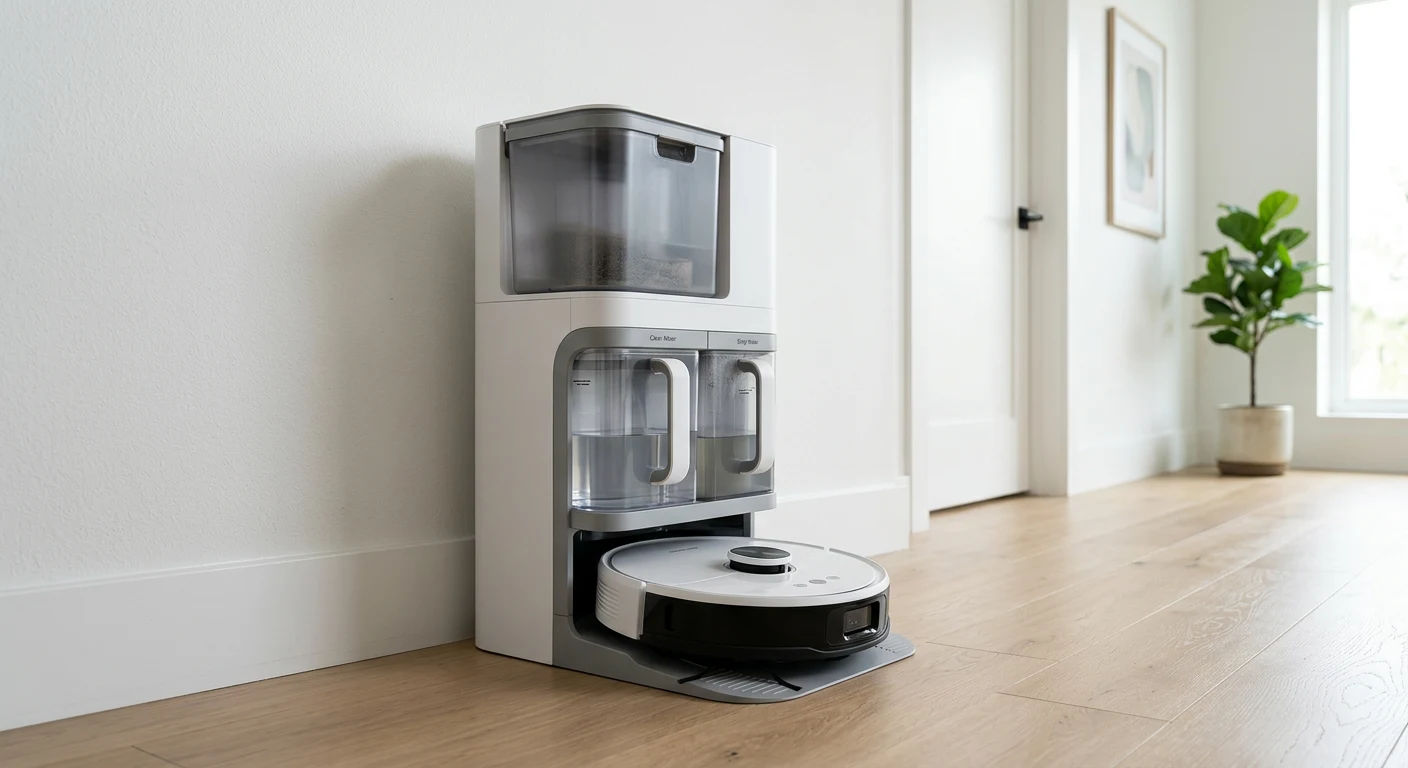
The Omni station changes the ownership experience entirely. Auto-empty, auto-wash, and auto-refill functions mean the unit genuinely runs itself between deep cleans. For anyone who considered robot vacuums too high-maintenance in the past, the Omni station removes that objection completely.
LiDAR navigation is non-negotiable for multi-room homes. Camera-based models work in open layouts, but LiDAR-equipped DEEBOTs adapt to furniture changes, handle low-light rooms, and build persistent floor plans that hold up over time — a critical advantage in complex spaces.
On value: the price-to-performance trade-off is real at every tier, but the DEEBOT ecosystem rewards long-term investment. Ready to match the right model to your home? Browse current DEEBOT lineup options at Ecovacs.com and use the floor plan filter to start smart.
The Verdict: Why the DEEBOT is My Daily Driver
The real test of any smart home device isn't how it performs on day one, but whether it's still solving problems six months later. In my professional experience evaluating consumer tech, the "workhorse" title is reserved for products that require less than five minutes of maintenance per week. The ecovacs deebot robot vacuum earns that title by stacking reliable LiDAR navigation with a self-maintenance loop that actually works. Whether it's the FocusJet mopping that handles dried paw prints or the quiet operation that doesn't trigger my dog's anxiety, the engineering choices here feel intentional rather than gimmicky.
If you're still wondering is DEEBOT a good robot vacuum, consider your specific "friction points." If you have a large floor plan, a multi-pet household, or simply value a quiet environment, the T50 Max Pro Omni or X8 Pro are top-tier investments. After hundreds of hours of run-time and hands-on testing across multiple home layouts, my floors are cleaner and my weekends are finally mine again. In the world of smart home automation, that’s the only metric that truly matters.