
The Shift from Gadgetry to Holistic Living

Smart home technology in 2025 is no longer about controlling your lights from an app — it's about building a home that thinks alongside you.
The early days of smart homes were defined by novelty: voice assistants answering trivia questions, app-controlled thermostats that still required manual scheduling. That era is closing. What's replacing it is a fundamentally different relationship between people and their living spaces — one driven by proactive AI that anticipates needs rather than waiting to be told what to do. A home that dims the lights before you realize you're tired isn't a gadget. It's a system.
Household adoption reflects this maturity. Smart home technology is projected to reach a 77.6% household penetration rate by 2025, signaling that this shift has moved well beyond early adopters. The tipping point isn't just technological — it's cultural. Consumers are no longer asking "what can this do?" They're asking "how does this fit into my life?" As Greg Walker, CEO of ASHB, puts it:
"People want technologies that are intuitive, sustainable, and enhance daily life — not just add convenience."
That distinction matters enormously. The most sophisticated smart home systems today are designed to be invisible — running quietly in the background, learning household patterns, and making micro-adjustments that users rarely notice but consistently benefit from. The less you interact with your home's technology, in many ways, the better it's working.
This push toward seamless, background intelligence sets the stage for a broader conversation about energy autonomy and what it means to live sustainably in 2025.
Reclaiming the Grid: The New Era of Energy Autonomy
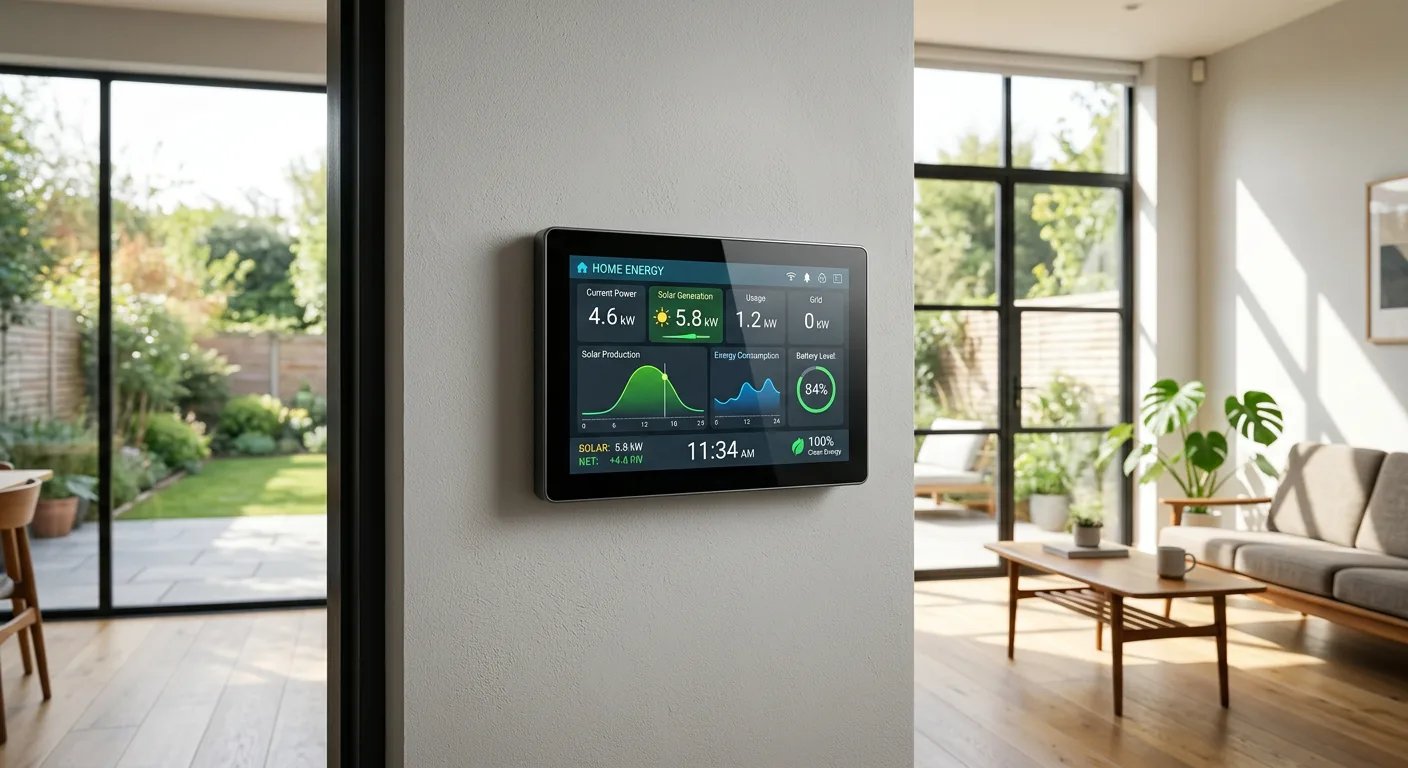
Smart homes are quietly becoming one of the most powerful tools in the fight against household energy waste — and the financial savings are just as compelling as the environmental ones.
Understanding how smart home technology will change lives means looking beyond convenience to something more structural: energy autonomy. Occupancy-sensing lighting and AI-driven climate control remove the single biggest variable in household energy waste — human error. Lights no longer burn in empty rooms. Thermostats no longer cool houses that nobody is in. The system simply adapts, continuously, without requiring anyone to remember anything.
The scale of that impact adds up fast. Research indicates that fully integrated smart homes can reduce annual energy consumption by 20% to 30%, while the average household can cut its carbon footprint by 500kg to 700kg of CO2 per year through smart home automation alone, according to findings highlighted by the University of Delta. That positions smart homes not as a lifestyle upgrade, but as a genuine participant in the broader green energy transition.
Savings Breakdown — What Automation Actually Delivers:
- Lighting: Occupancy sensors cut lighting energy use by an estimated 30–40%
- HVAC: Adaptive scheduling reduces heating and cooling costs by up to 20%
- Standby power: Smart plugs eliminate phantom loads, saving $100–$200 annually
- Net CO2 reduction: Up to 700kg per household, per year
The bigger picture is that millions of connected homes operating at this efficiency level represent a meaningful shift in national energy demand — one that supports renewable grid stability by flattening consumption peaks. For homeowners, the payoff is lower utility bills and a smaller footprint. For the grid, it's reduced pressure during high-demand periods. That dual benefit is what makes smart home automation worth taking seriously — and it's only one dimension of how this technology is reshaping daily life, including for one of the most vulnerable segments of the population.
The Future of Aging: Independence Through Intelligence

Smart home automation is quietly becoming one of the most powerful tools for helping older adults live safely, confidently, and on their own terms.
For decades, "aging in place" largely meant medical alert buttons and occasional check-in calls. That picture has changed dramatically. Today's systems move well beyond reactive alerts — detecting subtle changes in movement patterns that might signal a fall risk before an incident occurs, monitoring sleep quality, and flagging irregular routines that could indicate a health concern. The shift from reactive care to proactive monitoring is the defining upgrade of this generation of smart home technology.
The psychological impact of that shift matters just as much as the practical one. Research published by the Journal of Medical Internet Research found that smart home systems significantly improve quality of life for older adults by enhancing "future security" and "achieving in life" domains — two pillars closely tied to a sense of control and purpose. When a home responds intelligently to a person's needs without requiring constant manual input, it reinforces autonomy rather than signaling dependency.
In practice, this means a senior's home can notify a family member if the morning routine looks unusually different, adjust lighting automatically to reduce fall risk at night, and manage medication reminders without any effort from the resident. The technology recedes into the background, and the person stays in the foreground — which is exactly where they belong.
It's worth noting, however, that adoption still faces real barriers: cost, technical literacy, and installation complexity can limit access for those who need it most. As those hurdles lower, the same intelligence shaping energy autonomy in modern homes is now extending its reach into personal safety — a natural segue into how smart home systems are redefining security itself.
Smart Home Security: Beyond the Video Doorbell
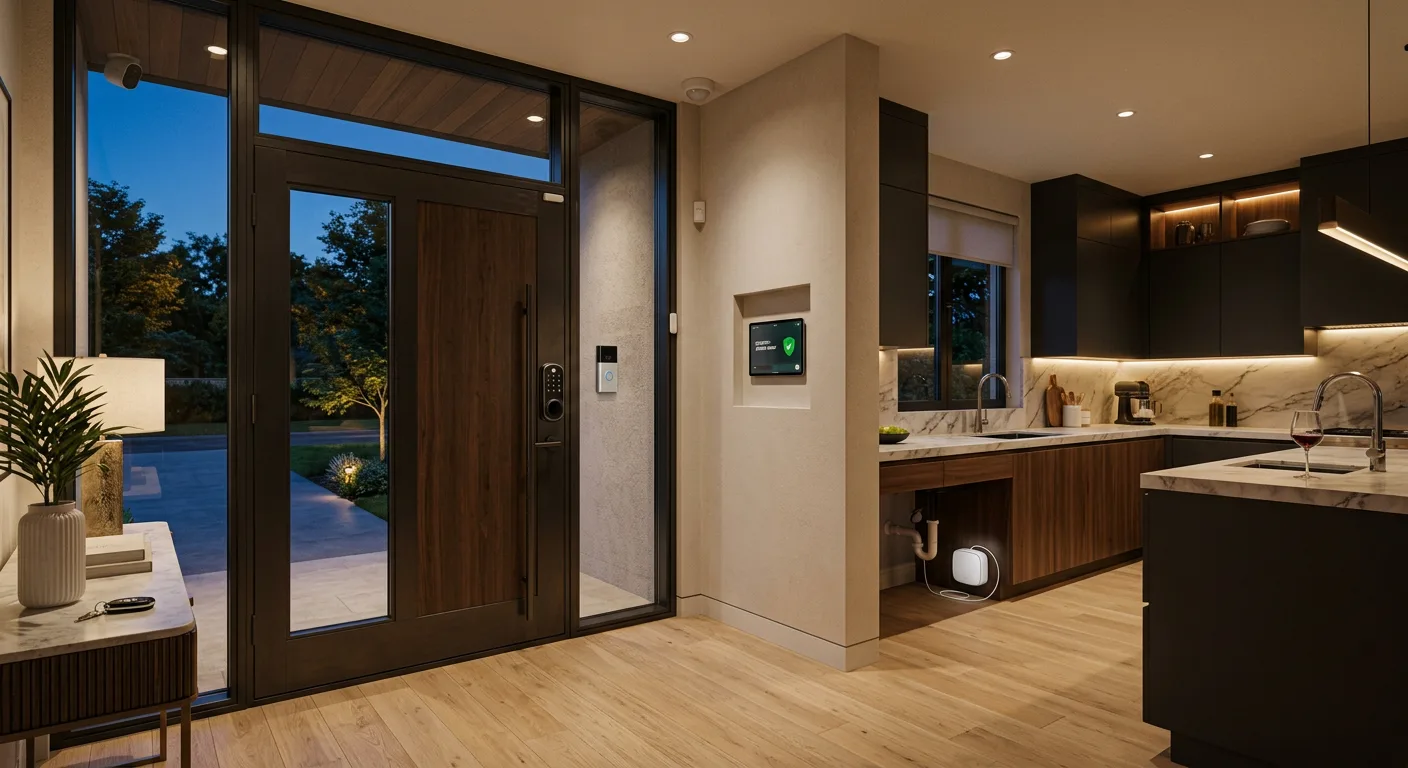
Most people still think of home security as a camera on the front door — but truly integrated smart home devices have made that definition dangerously outdated.
Modern smart home security isn't reactive; it's a predictive, layered system that acts before damage occurs. The old model waited for a break-in or a fire to alert you. Today's systems weave together leak sensors under the kitchen sink, smoke and CO detectors that communicate with HVAC systems, and perimeter security that distinguishes a delivery truck from an unfamiliar vehicle. Water leak detection alone can prevent thousands of dollars in structural damage by automatically shutting off the main supply line within seconds of detecting moisture. Fire prevention goes further than an alarm — smart systems can cut power to a specific circuit, close ventilation dampers, and notify emergency services simultaneously. With the average smart home expected to contain 15 to 20 connected devices within the next two years, the security layer binding those devices together becomes as critical as any individual component.
The psychological dimension of this shift is just as significant. In practice, homeowners who automate security monitoring report a measurable reduction in daily anxiety — the mental load of "did I lock the door?" dissolves when the system handles it autonomously. That peace of mind compounds over time, translating into genuine wellbeing benefits rather than just convenience.
AI-driven threat analysis is what makes this possible at scale. Older systems flooded users with false alarms, creating alert fatigue that caused people to ignore genuine warnings. AI models now learn household patterns — when family members typically arrive home, what normal motion looks like at 2 a.m. — and filter noise accordingly, as Savant's research into intelligent home ecosystems confirms. The result is faster, more confident emergency response when it actually matters. That intelligence, however, only reaches its full potential when every device speaks the same language — which is exactly where the conversation around interoperability becomes unavoidable.
The 2025 Integration: Solving the Interoperability Crisis
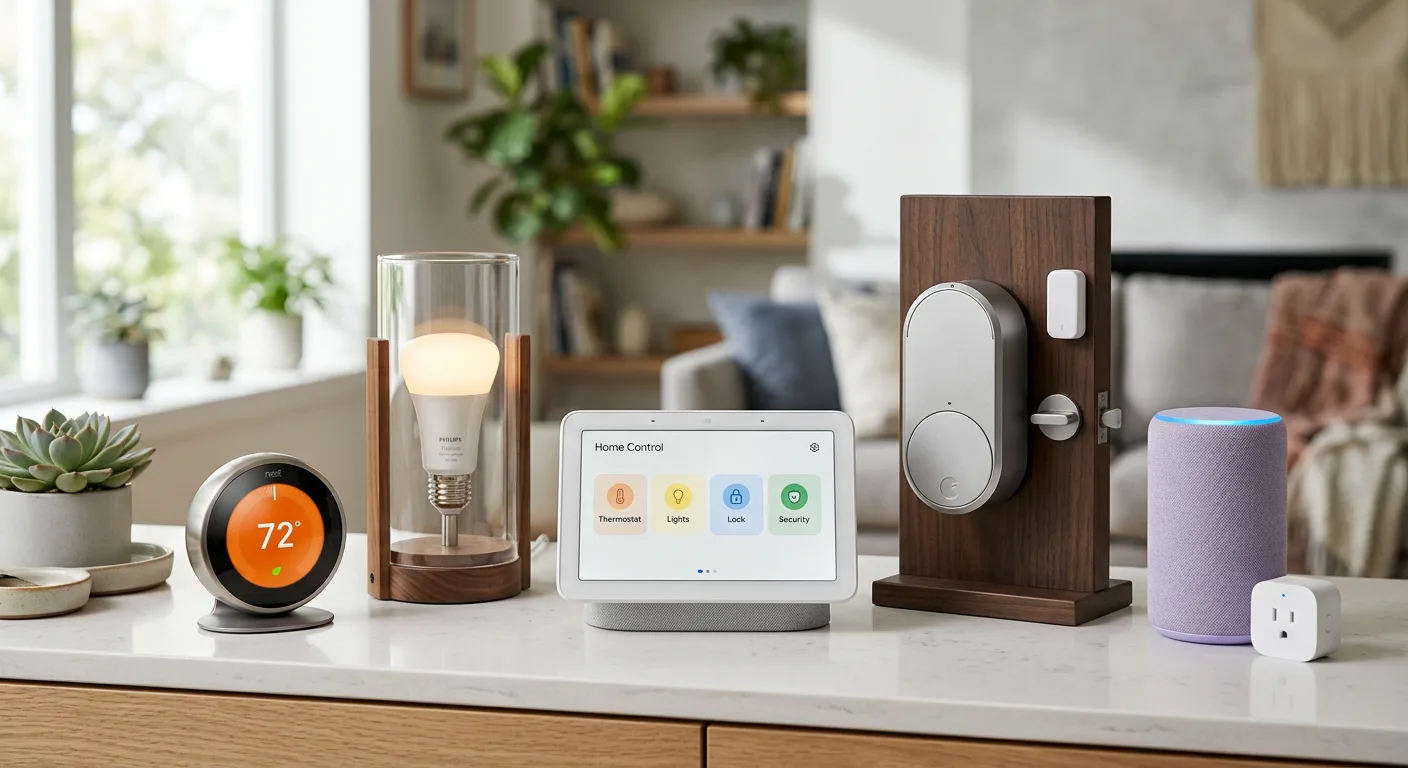
The future of smart home integration 2025 is defined by one word: interoperability — and the industry is finally delivering on that promise.
For years, the smart home's biggest enemy wasn't cost or complexity. It was fragmentation. Devices from different brands simply refused to speak the same language, forcing homeowners into walled gardens — closed ecosystems where every product had to carry the same logo or risk becoming an expensive paperweight. Consumer expectations, according to the American Smart Home Builders association (ASHB), have decisively shifted away from gadget collecting toward systems that deliver holistic well-being. That shift demanded a structural fix.
Matter and Thread protocols are that fix. Matter is an application-layer standard that lets devices from entirely different manufacturers communicate reliably. Thread is the low-power mesh networking protocol that keeps them connected without depending on a single hub or Wi-Fi bottleneck. Together, they form the backbone of a genuinely open ecosystem — one where a thermostat, a door lock, and a lighting system can coordinate intelligently regardless of who made them.
What this means in practice is that 2025-ready systems prioritize cross-brand communication as a baseline, not a premium feature. Systems built on these open standards — sometimes called Hyvoxa-ready architectures — are designed so adding a new device strengthens the whole network rather than creating another isolated silo.
What to look for in 2025-compatible smart home systems:
- Matter certification on every new device purchase
- Thread border router support built into your hub or router
- Multi-admin capability — devices controllable across different platforms simultaneously
- Local processing so automations run even when the internet is down
- Firmware update commitments from manufacturers beyond the initial sale
The walls between brands are coming down — and what's emerging on the other side is a genuinely unified home intelligence. That convergence, as the next section explores, adds up to outcomes that matter far beyond convenience.
The Bottom Line: What You Need to Know
Smart home technology has crossed a critical threshold — it's no longer a luxury add-on but a measurable contributor to energy savings, personal health, and daily safety. Here's a concise summary of what the evidence shows:
- Energy savings are real and significant. Homeowners with fully integrated smart systems consistently report 20–30% reductions in energy costs, driven by adaptive thermostats, automated lighting, and demand-responsive appliances working in concert.
- Senior quality of life improves measurably. Research published by JMIR confirms that home automation directly supports independent living — fall detection, medication reminders, and remote health monitoring reduce hospitalization risk and extend time at home.
- Smart home security is now a baseline expectation. The 2025 standard isn't a single camera or a smart lock — it's a unified system where 15 or more integrated devices share data, trigger responses, and adapt in real time to protect occupants.
- Integration is the deciding factor. Devices that operate in silos deliver convenience; devices that communicate deliver transformation. The homes outperforming on every metric — safety, efficiency, wellness — are those built around a coherent, interoperable ecosystem.
The shift from fragmented gadgets to genuinely unified living environments is well underway. Understanding where your home stands against that 2025 benchmark is the natural next step — and the right starting point for building something that actually works for you.
Building Your Future-Proof Home with Hyvoxa
Smart home technology has completed its transformation from a novelty into a genuine necessity — and how you navigate that shift determines the quality of life your home delivers. The sections above have mapped the full arc: health monitoring that catches warning signs early, energy systems that reduce costs, and integration standards that finally let every device speak the same language. The question is no longer whether to invest in a smarter home, but who guides you through it.
That gap between complex technology and daily living is exactly where Hyvoxa operates. In practice, the biggest barrier most homeowners face isn't budget — it's knowing which systems work together, which investments deliver real returns, and how to phase upgrades without disrupting the home they already love. A thoughtful integration partner translates the technical into the tangible, ensuring that Matter-compatible devices, adaptive energy management, and health-aware environments don't remain abstract concepts but become a home that actively works for the people inside it.
The next step is straightforward: start with an honest assessment of where your home stands today. Identify the gaps in energy efficiency, health support, and connectivity — then build toward a system that grows with your needs. Your home should be the most intelligent investment you own. Explore a personalized home assessment with Hyvoxa and take the first concrete step toward a living space that truly redefines the human experience.
Conclusion
Reflecting on my years in the field, the most successful smart home integrations aren't the ones with the most flashy screens; they are the ones that fade into the background of your life. My primary takeaway for homeowners is to stop buying individual smart home devices and start investing in an ecosystem. By prioritizing interoperability through new standards, you aren't just buying a new toy—you're future-proofing your independence.
The future of smart home integration 2025 is about reclaiming your time and energy. Whether it's the security of knowing your smart home security system is monitoring itself or the quiet efficiency of a house that manages its own carbon footprint, the ROI of these systems is ultimately measured in peace of mind. As we move forward, remember that the goal isn't to live in a computer; it's to live in a home that finally understands you.