
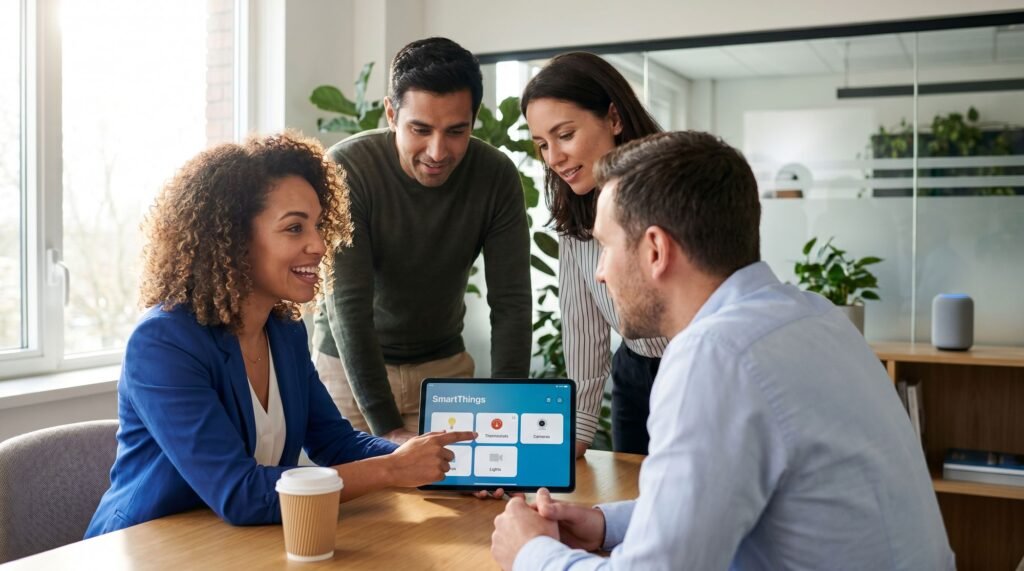
The Evolution of SmartThings: Why the Platform Isn’t Dying, It’s Moving In
The SmartThings Shift: From Hardware Headaches to Software Scale I still remember the sinking feeling when I received the email announcing the retirement of the SmartThings Groovy IDE. Like many users, I had invested dozens of hours into perfecting custom device handlers and complex WebCoRE routines that suddenly had an expiration date. For a moment, it felt like the platform was giving up on its most loyal community. But after testing the transition to the new Edge drivers and seeing my Samsung TV become a functional Thread Border Router, it became clear: SmartThings wasn’t dying—it was shedding its old skin to survive a much bigger market. The “is SmartThings discontinued” rumor mill continues to churn because Samsung changed the rules of the game. They stopped focusing on selling us $99 plastic boxes and started making the screens and appliances we already own work as the brain of the home. It’s a messy, often frustrating evolution for those of us who enjoyed the old tinkering ways, but from a stability and scale perspective, the data shows a platform that is finally ready for the mainstream. Here is why the move away from standalone hubs is actually the best thing that’s happened to the ecosystem in years. SmartThings is not dying — it’s quietly becoming one of the most ambitious smart home platforms on the planet. If you’ve stumbled across forum threads asking whether Samsung has abandoned its ecosystem, the data tells a very different story. The confusion is understandable. Samsung did sunset the physical V3 hub as a standalone product, and it retired several legacy features that longtime users had built their routines around. For users who’d invested heavily in older setups, that felt like abandonment. However, discontinuing a piece of hardware isn’t the same as discontinuing a platform — and that distinction matters enormously. What Samsung actually did was shift SmartThings away from a hub-dependent model toward a software-first architecture. Instead of requiring a dedicated box to run your automations, the platform is now embedded directly into devices you already own. The result? A dramatically larger addressable audience and a rapidly expanding library of smartthings compatible devices that work without any additional hardware purchase. The growth numbers reflect that strategic pivot. Samsung Electronics reported via SamMobile that SmartThings reached 430 million global users by the end of 2023 — an increase of 80 million users in just over a year. Platforms on their deathbed don’t post numbers like that. That software-first shift has a name and a specific strategy behind it — one centered on turning your existing Samsung devices into the hub itself. That’s exactly where things get interesting. The ‘Hub Everywhere’ Strategy: Your TV is the New Controller Samsung’s boldest move isn’t a new device — it’s eliminating the need for one entirely. For anyone still searching “is SmartThings discontinued,” the answer is hiding in plain sight: Samsung has been quietly embedding SmartThings Hub software directly into hardware you already own. This is the Hub Everywhere concept. Rather than requiring a dedicated hub sitting on a shelf, Samsung has baked hub functionality into its broader product ecosystem. According to SmartThings.com, the following 2023 and 2024 Samsung devices now function as fully capable SmartThings Hubs: The practical benefit here is significant. In practice, fewer dedicated devices means fewer single-purpose boxes consuming outlets, generating heat, and creating network fragility. One failed hub used to mean one failed smart home — a frustration well-documented in early community discussions. The distributed model changes that calculus completely. The 2024 and 2025 hardware generations are central to this shift because they represent Samsung’s first broad rollout of embedded hub capability at scale. Rather than a pilot program, this is a platform-wide architectural decision. Your TV isn’t just a screen anymore — it’s infrastructure. This hardware-agnostic approach also sets the stage for something even larger. Once the hub lives everywhere, the question becomes: what can it actually connect to? That’s where SmartThings’ latest protocol commitments become genuinely exciting. Matter 1.5 and the End of Ecosystem Silos For anyone still typing “is samsung smartthings discontinued” into a search bar, Samsung’s Matter rollout is perhaps the clearest proof that the platform is moving forward, not fading out. “Samsung aims to ensure that products and services built on different brands and protocols deliver a unified experience through SmartThings.” — Jaeyeon Jung, EVP and Head of SmartThings Team Matter 1.5 is the first protocol update to bring security cameras and video doorbells into the unified smart home fold — without requiring proprietary APIs or brand-specific workarounds. Samsung’s December 2023 update made SmartThings one of the earliest platforms to adopt this specification, enabling direct integration with cameras from brands like Aqara and Eve. In practice, that means a camera purchased from a completely different ecosystem can now appear natively inside SmartThings — with live feeds, motion triggers, and automation support — as if it were a Samsung product from day one. What makes this genuinely significant isn’t just the expanded device list. For years, video devices remained stubbornly outside the Matter standard, forcing users into fragmented app-juggling across multiple platforms. Matter closes that gap at the protocol level. SmartThings users now get cross-brand camera compatibility without compromise — a shift that quietly dismantles one of the last major objections to building a serious smart home on Samsung’s platform. That same commitment to breaking down walls extends well beyond security hardware, which is where things get even more interesting. Beyond Automation: AI-Driven Family and Pet Care SmartThings’ new AI features represent the platform’s most significant functional expansion yet — moving well beyond lights and locks into genuine human wellness territory. As reported by The Next Web, Samsung has added elderly care monitoring and ambient sensing to the SmartThings platform, signaling that the ecosystem’s ambitions now extend into daily health and family safety. Family Care is the standout addition. Rather than requiring dedicated medical hardware, it uses ambient sensing — drawing on motion patterns, door activity, and device interactions across existing
The Evolution of SmartThings: Why the Platform Isn’t Dying, It’s Moving In Read Post »