
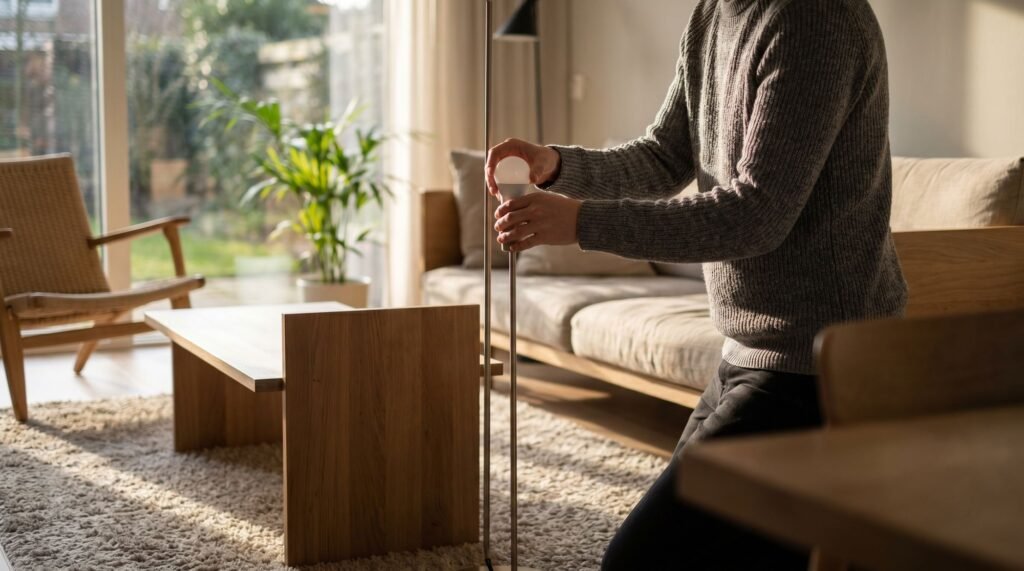
Lighting Automation: The Smartest First Home Upgrade
Why Lighting is the Ultimate Entry Point for Home Automation We’ve all been there: fumbling for a light switch with both hands full of groceries, or realizing halfway to work that the kitchen lights are still burning through the electric bill. I remember when I first tackled my own home's lighting; I approached it as a hobbyist’s puzzle, but it wasn't until the first time my hallway lit up automatically as I walked in that the concept of a "smart home" finally clicked. It’s the one upgrade that fixes a dozen daily friction points simultaneously, shifting your environment from a static space to one that anticipates your needs. If you’ve ever wondered, "how can I automate my lights at home" without a degree in electrical engineering, you aren't alone. Most people start with a single pair of smart lights for home use, only to realize the rabbit hole goes much deeper. Whether it’s the peace of mind of a well-lit driveway or the sheer convenience of a "Goodnight" command that kills every bulb in the house, a smart lighting system is the foundation upon which every successful automation strategy is built. Smart lights have become the entry point of home automation — and the data backs that up. According to Parks Associates, 20% of U.S. broadband households already own at least one smart light bulb, making lighting the single most common first step into the connected home. That figure isn't a coincidence. It reflects something fundamental about how people evaluate new technology: they start where the payoff is most immediate and the learning curve is lowest. Lighting automation delivers visible results from day one — no complex integrations, no professional installation required in most cases, and minimal investment to see the difference. Swapping a standard bulb for a smart one takes minutes, yet it opens the door to scheduling, remote control, and scene-setting that makes a home feel genuinely modern. That accessibility is why lighting consistently outpaces thermostats, locks, and security cameras as the first smart device people adopt. What begins as a single bulb, however, rarely stays that way. A common pattern is for homeowners to expand gradually from standalone fixtures into an integrated system — one where smart lighting controls coordinate across every room, respond to occupancy, and sync with shading, audio, and climate systems. This shift from isolated devices to a holistic ecosystem is where lighting automation moves from a convenience upgrade to a foundational layer of a truly intelligent home. Understanding how that ecosystem drives real energy savings is exactly where this conversation goes next. The Core Efficiency: How Automation Slashes Energy Bills A well-configured smart lighting system doesn't just add convenience — it delivers measurable, bill-reducing efficiency that pays for itself over time. According to the U.S. Department of Energy, automated lighting can cut residential energy consumption by up to 35% through occupancy sensing and intelligent dimming alone. That's not a marginal gain; it's a structural shift in how your home uses power. Three mechanisms drive the bulk of those savings: Occupancy sensors detect when a room is empty and cut power automatically — eliminating the single biggest source of lighting waste: lights left on in rooms nobody's using. Automated dimming reduces wattage draw during low-activity periods and, as a side benefit, significantly extends bulb lifespan by reducing thermal stress on LEDs. Scheduled and daylight-responsive controls adjust brightness based on natural light levels, so your fixtures aren't fighting the sun at noon or burning full power on a bright afternoon. The compounding effect is real: lower wattage plus fewer hours of full-power operation adds up fast. There's also a broader angle worth noting. Lighting controls integrate naturally with HVAC systems — smart fixtures that dim in response to sunlight also reduce solar heat gain indirectly, lightening the load on your air conditioning. That connection between lighting and climate control is one reason automation tends to expand outward from lighting so naturally. Of course, realizing these gains depends on how you set up control in the first place — which brings up an important choice every homeowner faces early on. Smart Bulbs vs. Smart Switches: Choosing Your Control Method The hardware path you choose for your smart lights for home shapes everything — cost, reliability, and long-term flexibility. Smart bulbs are the obvious starting point. They screw into any standard socket, require zero electrical work, and often support full RGB color control. The tradeoff is a hidden fragility: if someone flips the wall switch off, the bulb loses power and drops off your network entirely. They also add up quickly — replacing every bulb in a four-bedroom home can cost $200–$400 before you've touched a single switch. Smart switches, on the other hand, control power at the wall rather than at the bulb. This means your existing fixtures, dimmers, and even non-smart bulbs come under automation control. In practice, this is the more reliable long-term approach — the switch always has power, stays connected, and survives a curious houseguest toggling the wall plate. The installation requires basic wiring confidence, but the per-room cost is typically lower at scale. A third path worth knowing: smart home LED light controllers. These are purpose-built for architectural applications — under-cabinet strips, cove lighting, toe-kick accents — where neither a bulb nor a switch fits the format. As FlexfireLEDs notes, integrating LED strip systems into a broader smart home setup is a growing priority for homeowners who want design-forward lighting control. Option Best For Main Drawback Smart Bulbs Renters, quick setup, color scenes Loses connectivity when switch is off Smart Switches Whole-home reliability, existing fixtures Requires wiring; no per-bulb color LED Controllers Accent and architectural strip lighting Specialized install; limited fixture types Most homes end up using a combination of all three. Understanding which tool solves which problem is what separates a frustrating patchwork system from one that runs seamlessly — and that seamlessness becomes especially important when automation moves beyond convenience into home security. The Security Factor: Making Your
Lighting Automation: The Smartest First Home Upgrade Read Post »